Twisted
Explore Landscapes #111
Photographing the UK’s only member of Europe’s Association of Twisted Spires, that has the greatest lean and twist of the 72 member churches.
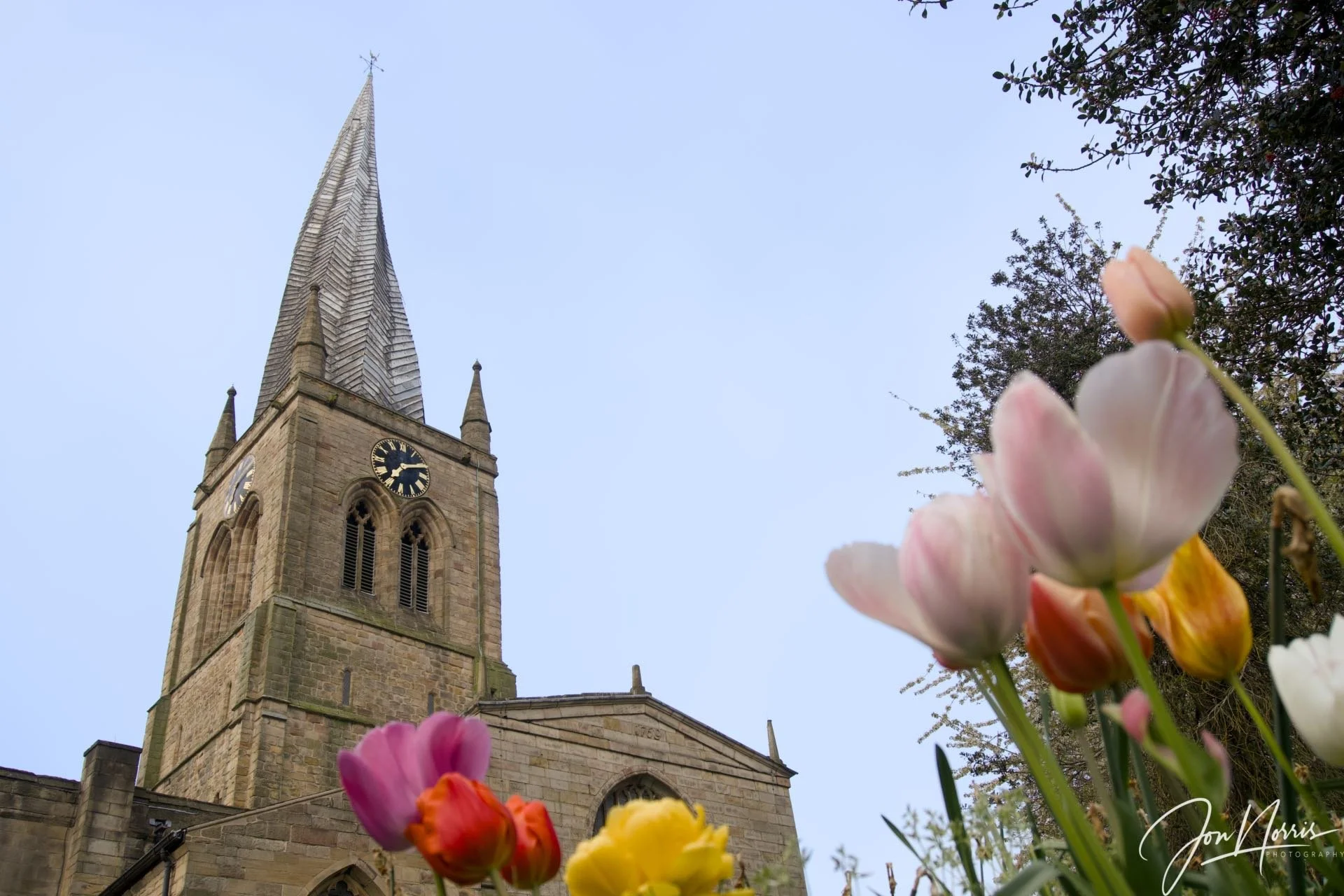
St. Mary and All Saints Church, Chesterfield, UK | © 2026 Jon Norris
During mid-April I visited the UK to spend a week with my Dad. He lives in Chesterfield (Derbyshire) and something that has always caught my attention but I had not yet photographed ‘properly’ was the famous ‘Crooked Spire’ of St. Mary and All Saints Church.
So one very cold morning (I hadn’t prepared for this trip at all well - not bringing sufficient warm clothing) I headed into town early to explore the church yard and take some photographs.
Chesterfield is a lively market and industrial town in Derbyshire, England. It is about 24 miles (39 km) north of Derby and 11 miles (18 km) south of Sheffield. The town sits where the River Rother and Hipper meet. In 2024, about 78,300 people lived in Chesterfield, making it the second-largest town in Derbyshire, after Derby.
Chesterfield’s history goes back to a temporary Roman fort from the 1st century. The town’s name comes from old English words: ceaster (meaning Roman fort) and feld (meaning pasture). Today, Chesterfield is famous for its large street market, which runs three days a week. The town was once a big coal mining area, but most mines have now closed.
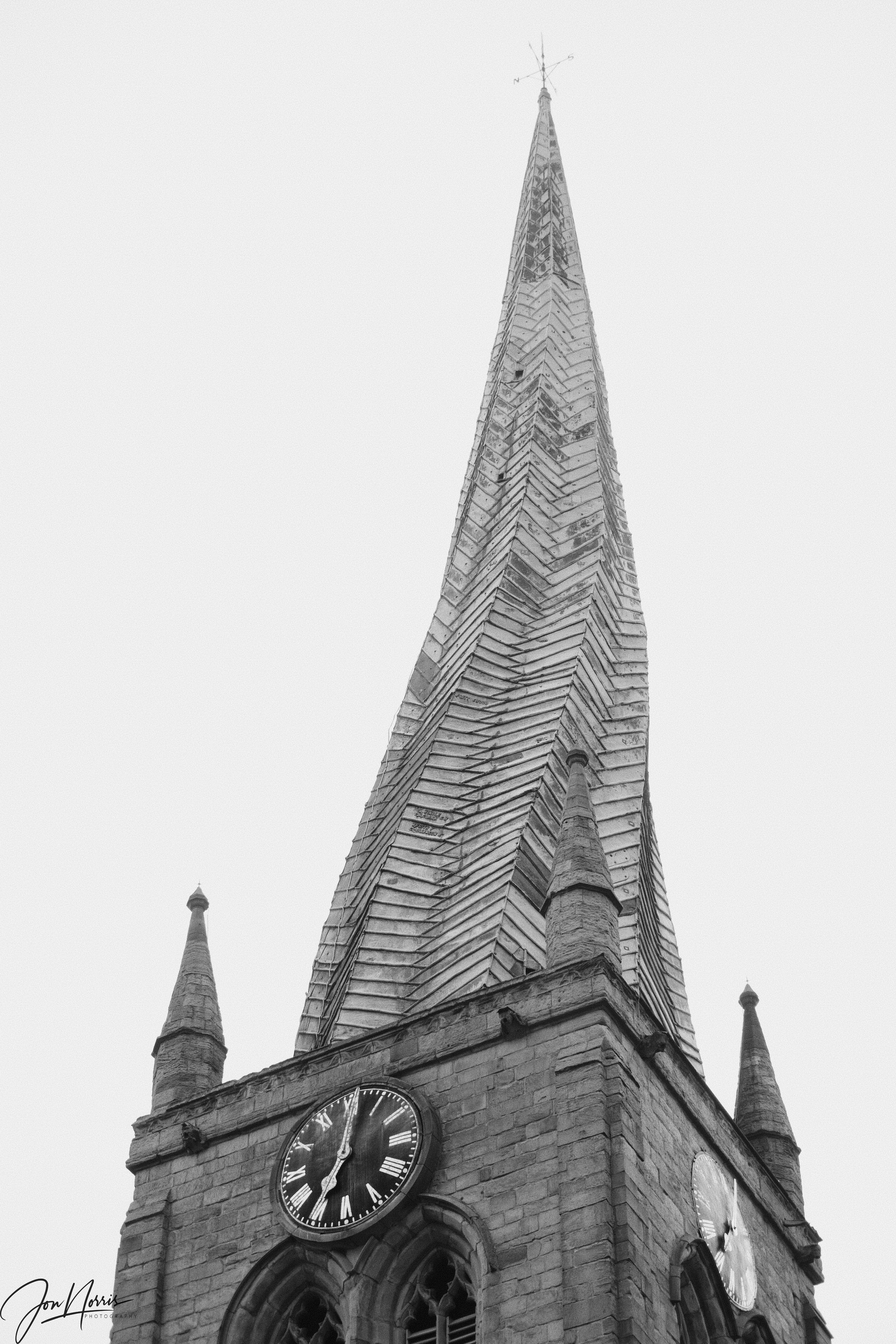
St. Mary and All Saints Church, Chesterfield, UK | © 2026 Jon Norris
Building of the church began in 1234 AD, though most of the present church dates from the 14th century. St. Mary and All Saints is the Chesterfield Parish Church and is a designated Grade I listed building.
The town motto of Chesterfield is “Aspire.” - a punning reference to the town’s famous crooked spire. The motto appears on the town’s coat of arms, which was officially granted in 1955. The design includes a mural crown representing borough status, a pomegranate tree symbolizing loyalty to the crown, and supporters featuring a cock and a magpie (pynot) from the historic Cock and Pynot Inn.
The Church’s twisted spire gave the town’s football club Chesterfield F.C. their nickname, The Spireites. A depiction of the spire also features on the club’s crest.
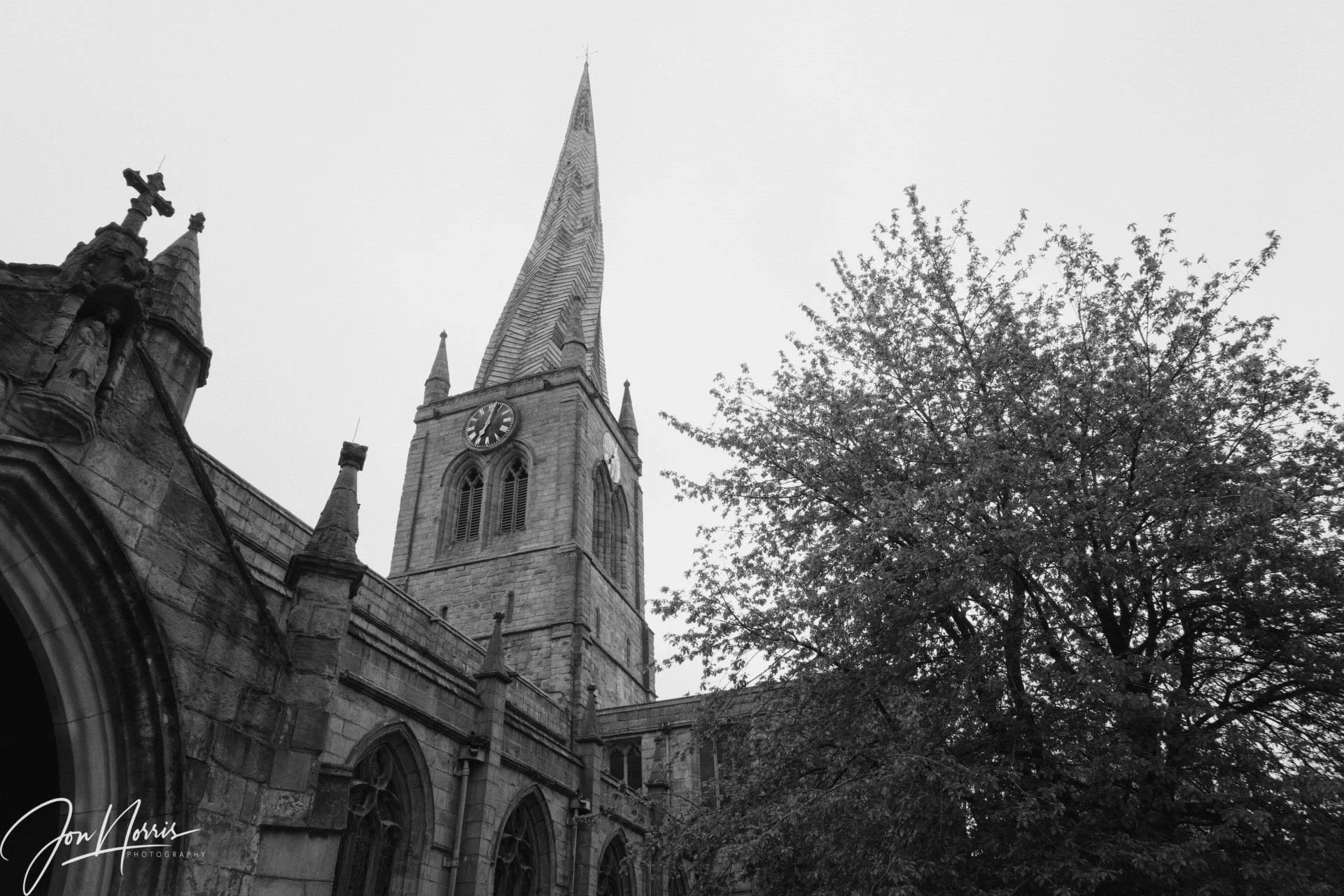
St. Mary and All Saints Church, Chesterfield, UK | © 2026 Jon Norris
It is the UK’s only member of Europe’s Association of Twisted Spires (L’Association les Clochers Tors d’Europe), and of the 72 member churches, it has the greatest lean and twist.
The spire was added in about 1362; its top is 228 feet (69 m) above the ground. It is both twisted and leaning: the 45-degree twist causes the tip to lean 9 ft 6 in (2.9 m) off centre. The reason is uncertain and still debated: suggestions include lack of skilled workers because of the Black Death, which occurred as much of the church was being built; the use of insufficient cross bracing and ‘green timber’ – unseasoned timber; and also the 17th-century addition of 33 tons of lead sheeting covering the spire, resting on 14th-century bracing not designed to carry such weight. Another theory is sunlight heating the south side of the tower and causing the lead there to expand at a greater rate than the north side, resulting in an unequal expansion. It is possible that the spire’s twist is due to a combination of these factors.
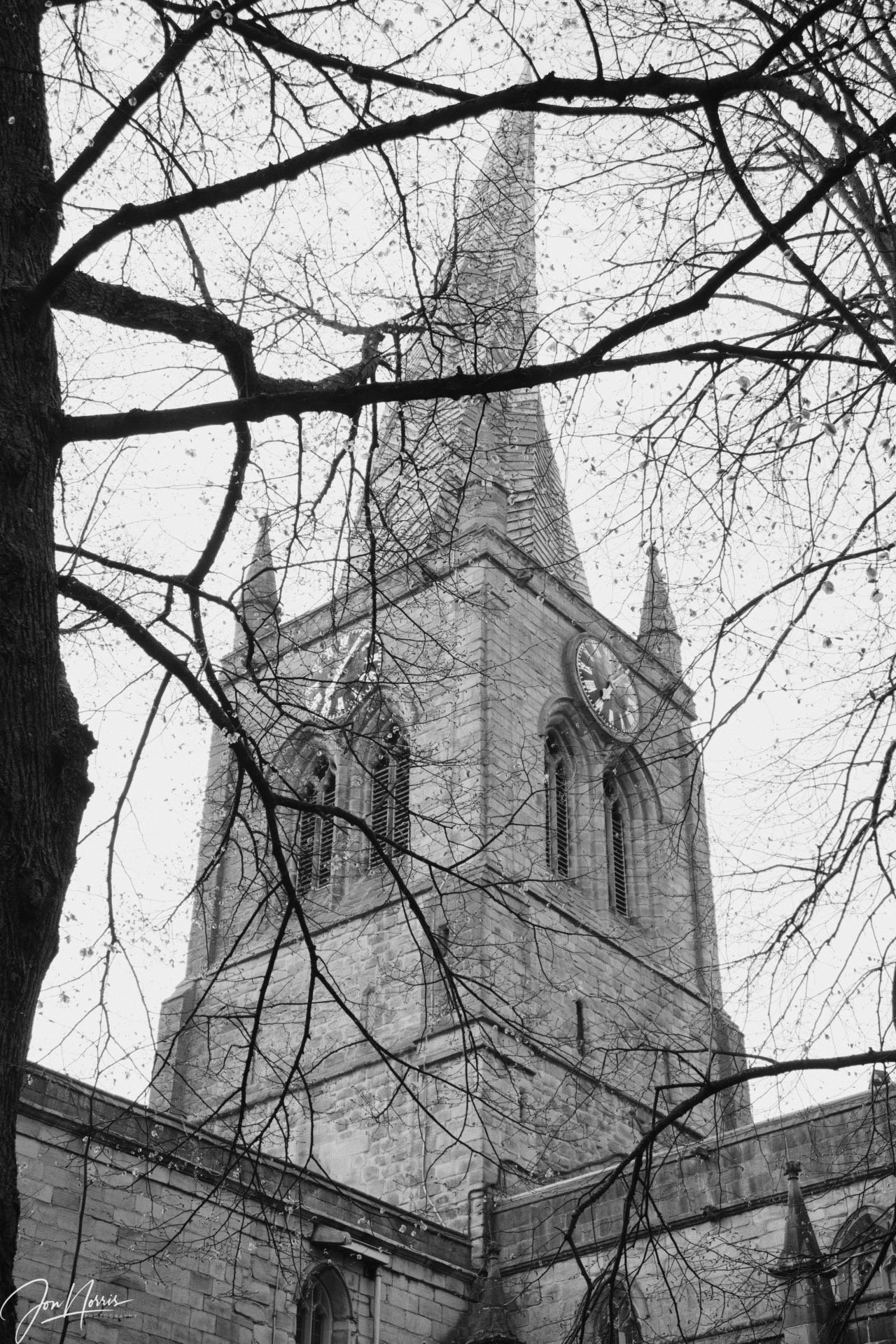
St. Mary and All Saints Church, Chesterfield, UK | © 2026 Jon Norris
There are local folk legends as to why the spire is twisted, mostly involving the Devil. In one, a Bolsover blacksmith mis-shod a hoof of the devil, who leapt over the spire in pain and angrily kicked it out of shape. Another states that the devil was resting on the spire when the smell of incense wafting up from inside the church made the devil sneeze, so violently that it caused the spire to warp.
A similar story has the devil flying from Nottingham to Sheffield and stopping for rest atop the church, its tail wrapped around the spire, but the ringing of the church bells startled the devil and on leaping away its lashing tail twisted the spire.
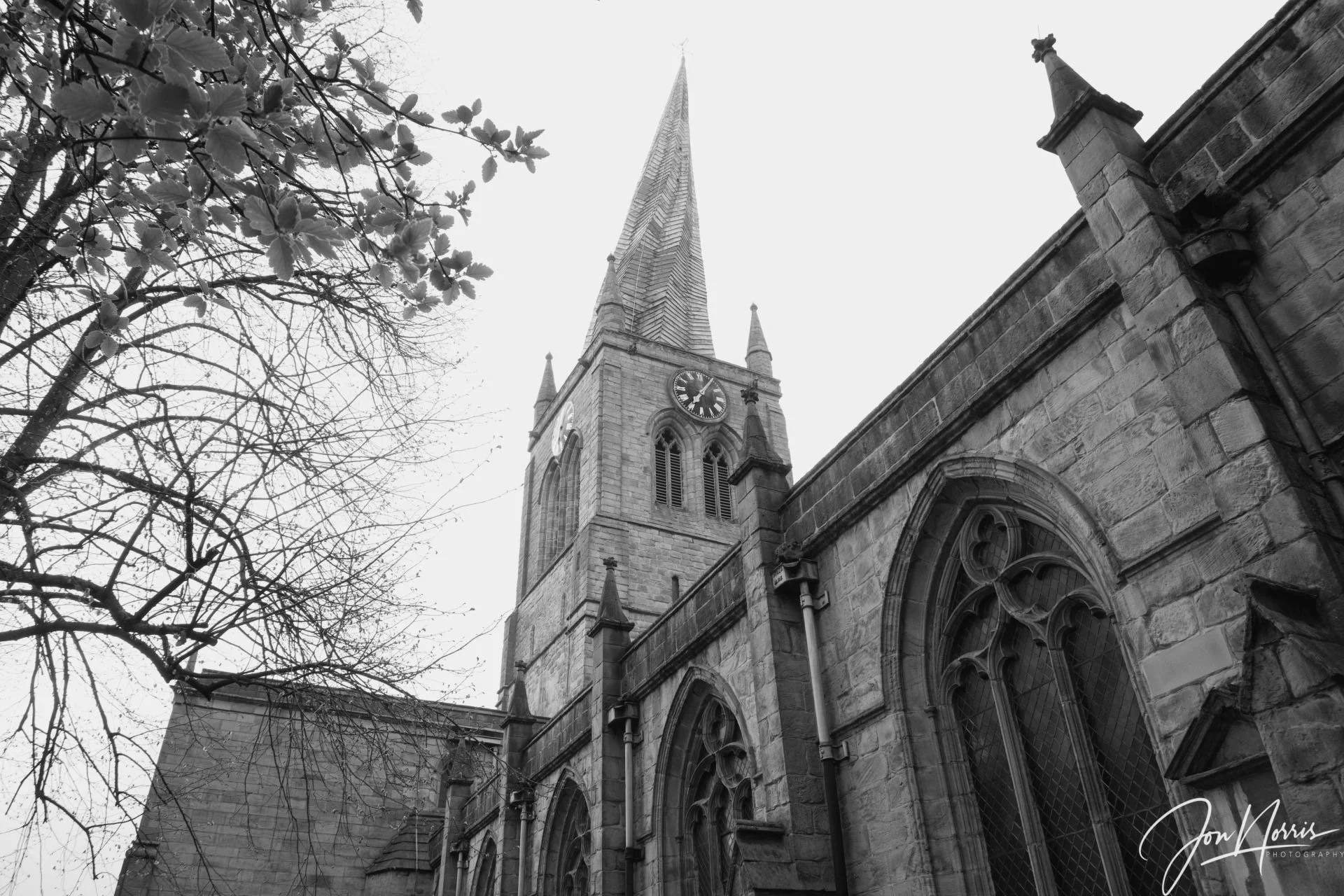
St. Mary and All Saints Church, Chesterfield, UK | © 2026 Jon Norris
Another myth suggests that the spire, so captivated by the beauty of a bride, leant down for a closer view but became locked in a twisted position, while the more mocking version has the church being so surprised to see a virgin being married, whether groom or bride, that its spire turned to look at the betrothed, becoming stuck – but that should another virgin ever marry in the church, the spire will return to true again.
Thanks for being part of my photography community. I appreciate you!
