Glimpses of Hong Kong
Explore Landscapes #117
A collection of images and videos from my multiple visits to Hong Kong this year, which have left me wanting more and to visit again soon.
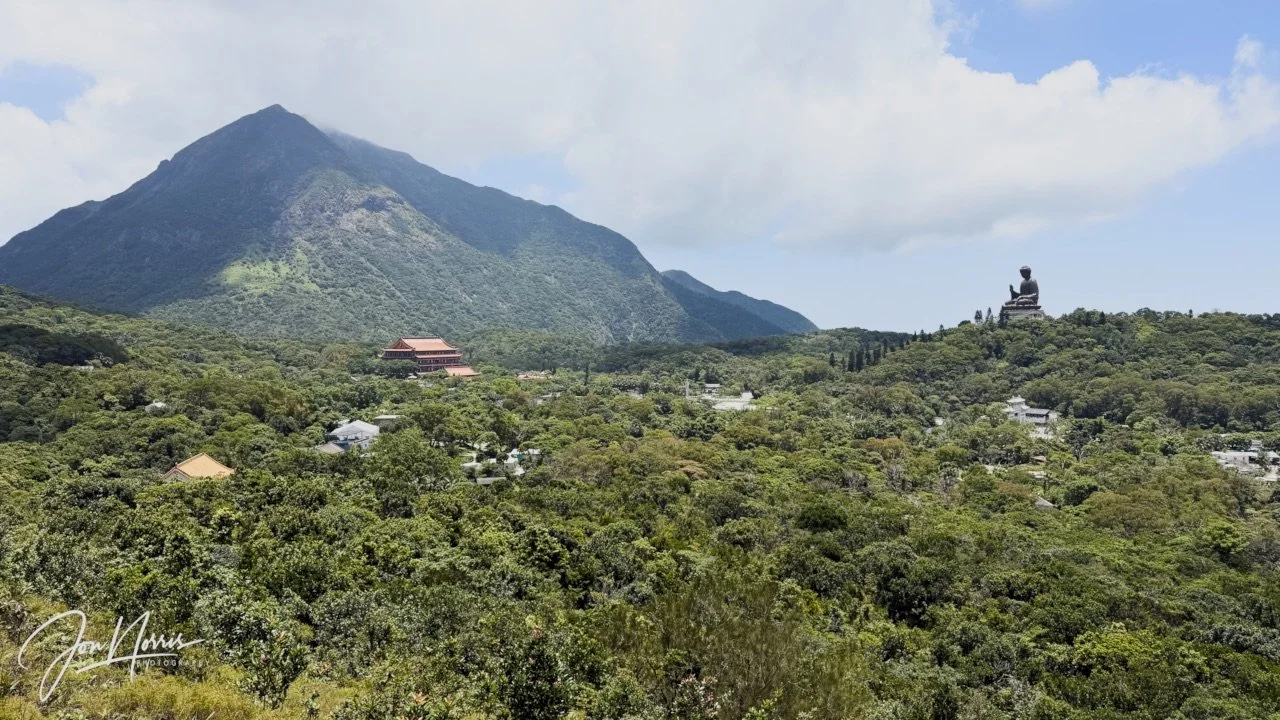
Po Lin Monastery and the Tian Tan Buddha from the Ngong Ping 360 viewing platform | © 2026 Jon Norris
In the past 4 months I’ve visited Hong Kong 3 times. During each visit I’ve managed to carve out a few hours, or a half-day here and there, to explore this fascinating country—or rather I should say, this Special Administrative Region (SAR) of China. I should point out that these have been work trips (day-job) rather than for vacation.
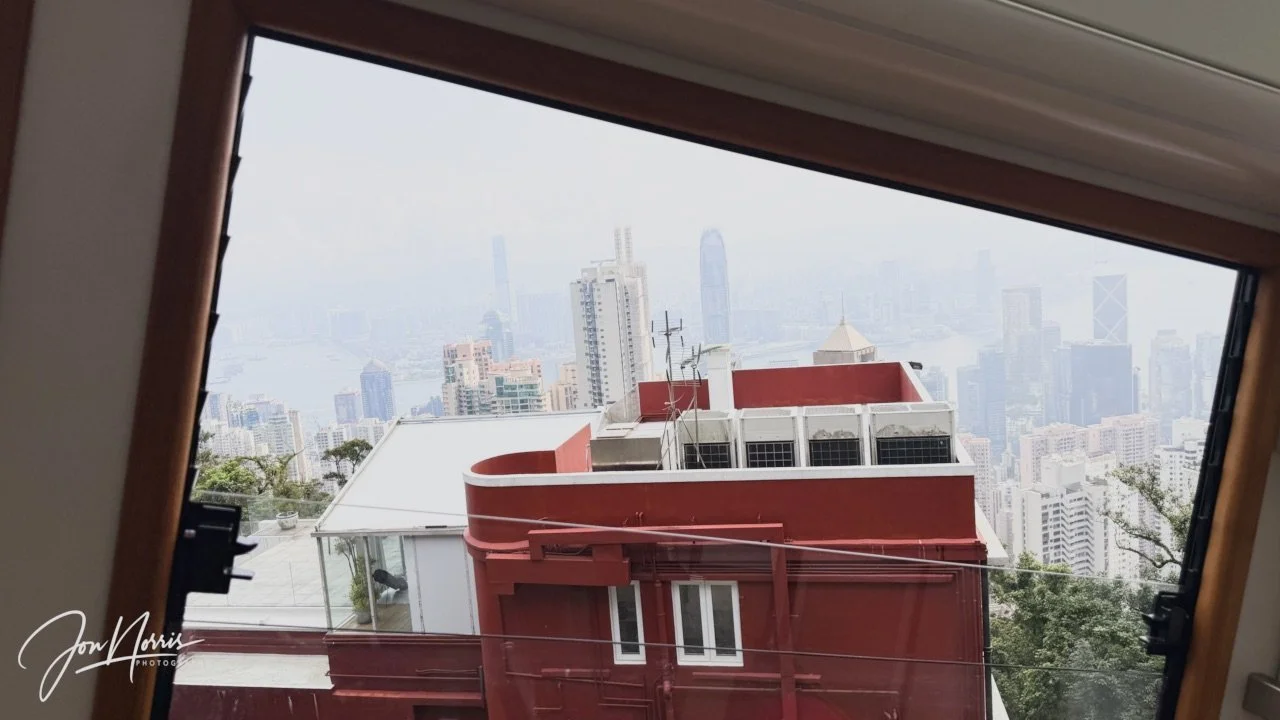
Looking out over Hong Kong Island towards Kowloon from the window of the Peak Tram | © 2026 Jon Norris
Despite having visited Hong Kong multiple times in the past, I’d not had the chance to properly explore Kowloon or Hong Kong Island—having spent most of my time around Chek Lap Kok airport (I work in aviation B2B marketing).
On each of my flights from LAX to HKG I spent a few hours planning out my half-day adventures for each trip. Hong Kong is such a densely populated region that you can see a lot of ‘stuff’ without having to travel too far. It also, helps that the public transport system is excellent.
My first destination was Victoria Peak and taking the Peak Tram up there. The Peak Tram is one of the world’s oldest and most famous funicular railways, which rises 1,300 feet (396 m) above sea level, with a gradient of between 4 and 25.7°.
It’s so steep that it takes a while for your brain to adjust to the fact that the buildings you pass aren’t in fact tilting towards the peak.
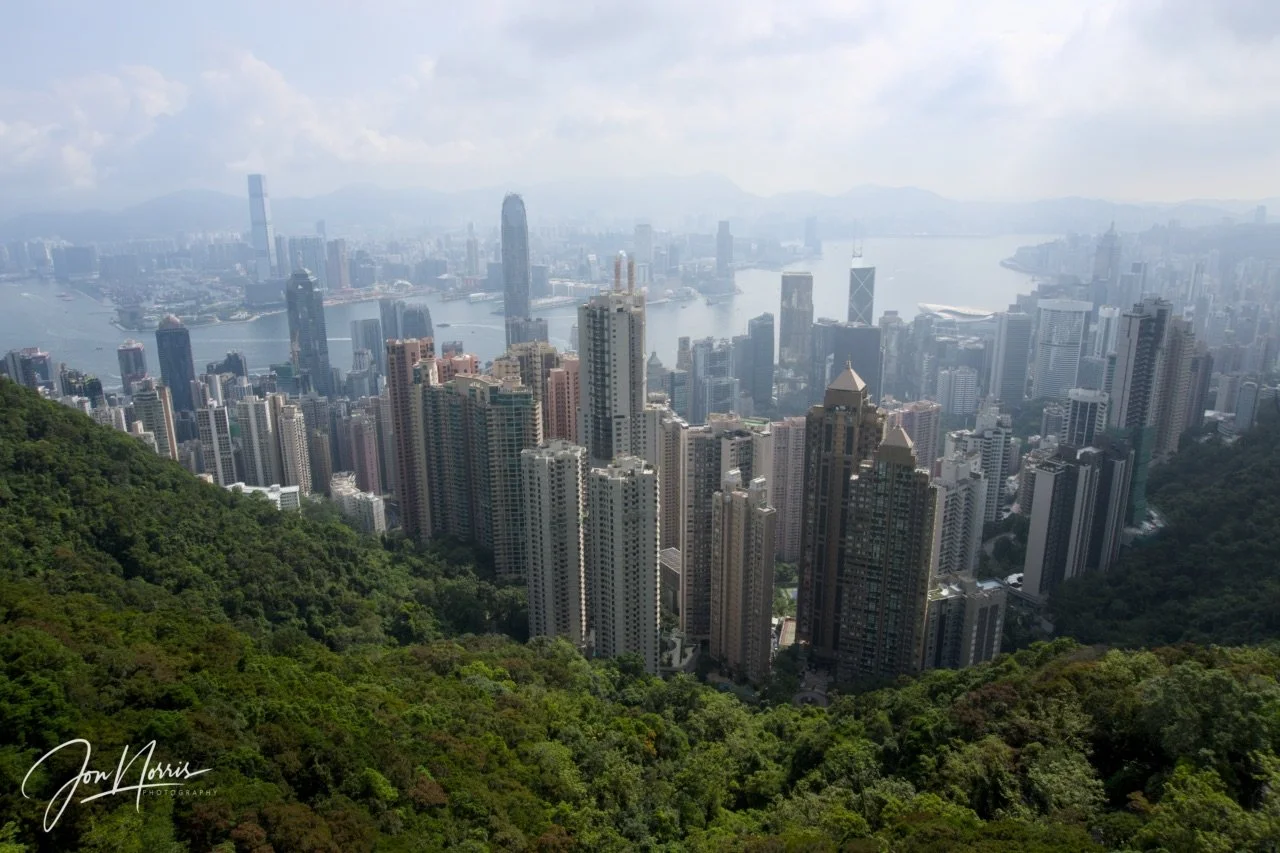
Video and Image: The view over Hong Kong Island towards Kowloon from Victoria Peak | © 2026 Jon Norris
I heeded the warning to get one of the first trams up to the peak to avoid the crowds, and I’m grateful that I did. As I’d skipped breakfast at the hotel in favor of an early start I rewarded myself with breakfast at Bakehouse at The Peak.
Bakehouse in Hong Kong is famous for sourdough egg tarts—which have a flaky croissant-like crust and a caramelized egg custard center. Damn—they’re good!
My jet lag was demanding that I increased my coffee intake—the 15-hour time difference between the US West coast and Hong Kong was catching up with me. A double espresso gave me some temporary relief.
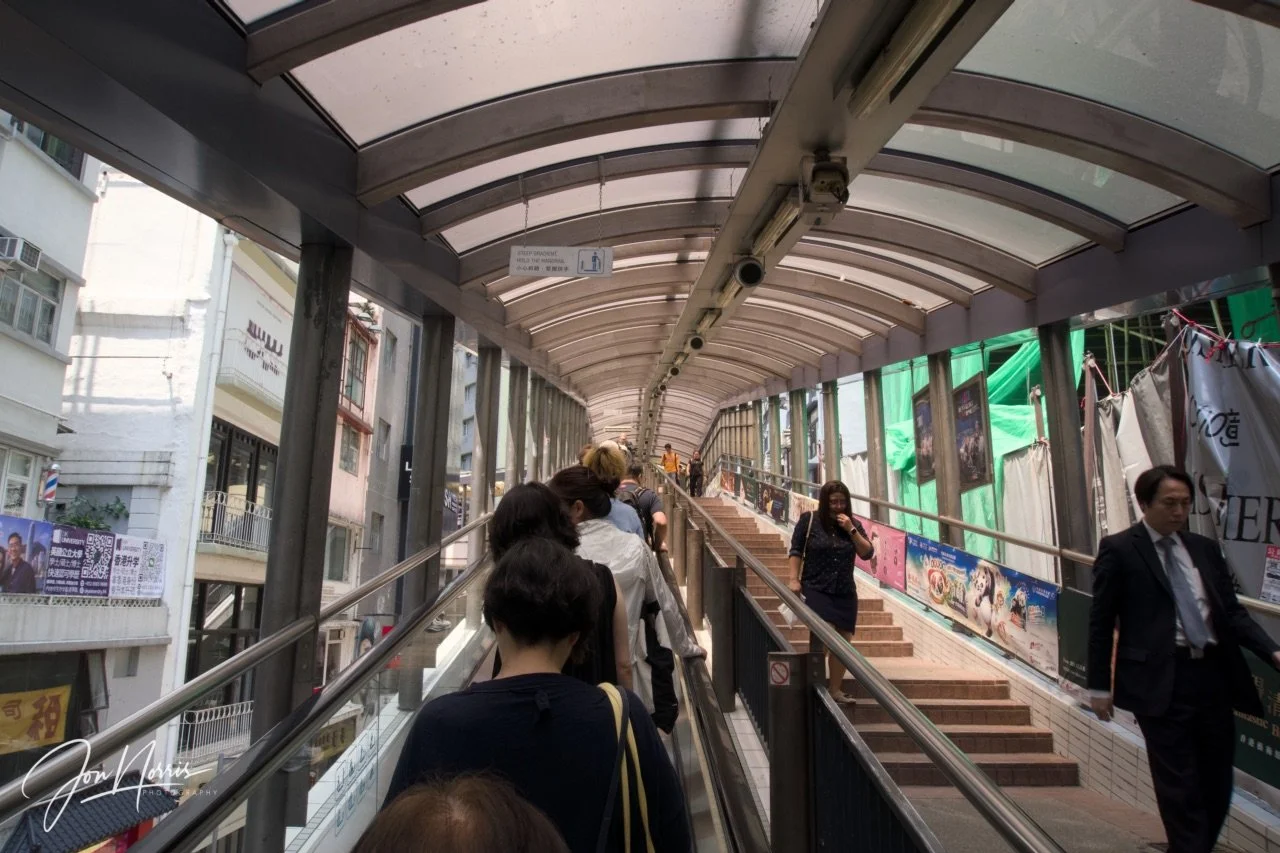
Central-Mid-Levels escalator | © 2026 Jon Norris
Another ‘attraction’ I was keen to see was the Central-Mid-Levels escalator—or rather escalators, as there’s a number of them in quick succession. The escalators were built in an attempt to reduce the volume of motor traffic zigzagging for miles to get up and down the steep, hilly terrain of Hong Kong Island. However, as well as overrunning the budget by 153%, the elevators also had no obvious reduction in traffic.
The escalator system (18 escalators and 3 inclined moving walkways) takes about 20 minutes to navigate and is 2,600 ft (800 m) long with a vertical climb of 443 ft (135 m). As you ascend you get great views of the complex vertical sprawl of housing, shops and offices that make Hong Kong such a one-of-a-kind place to visit.
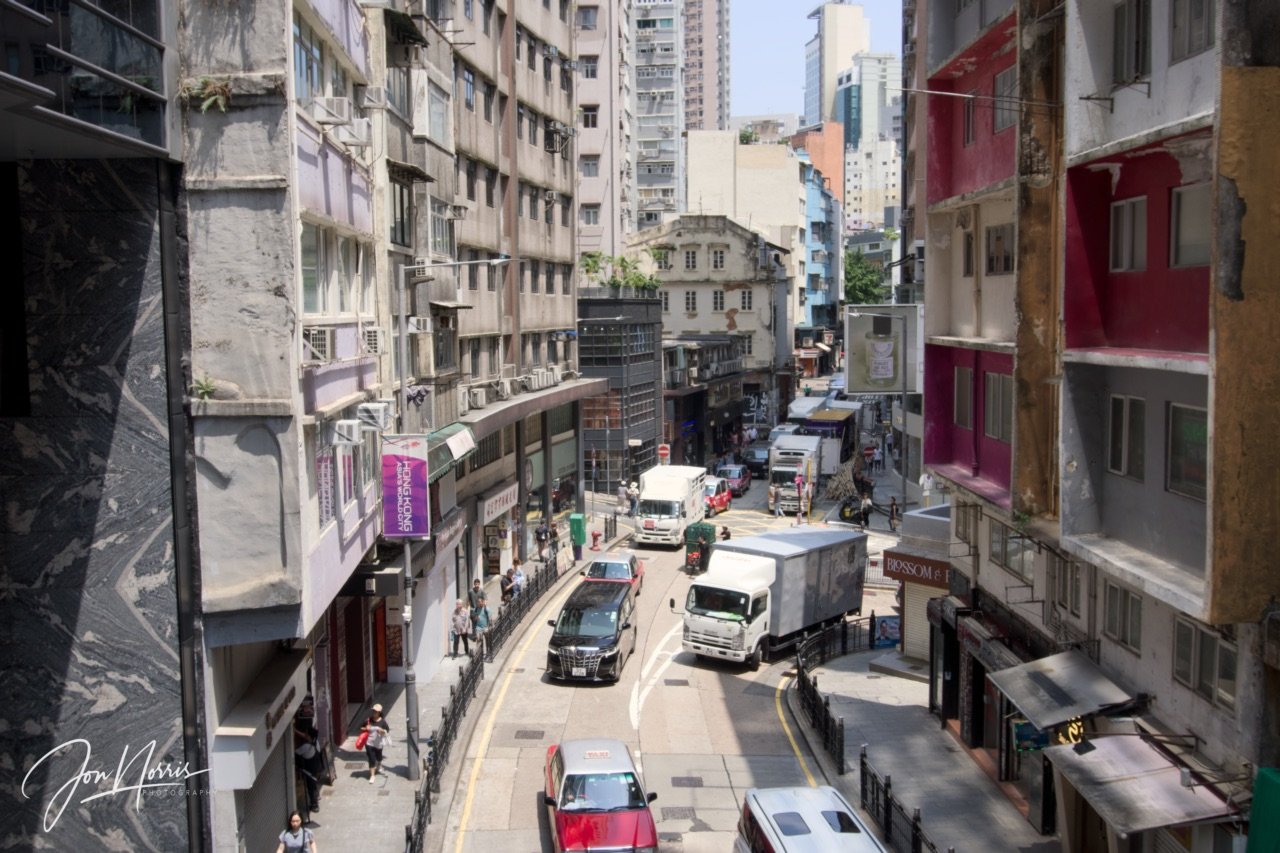
Typical traffic situation in Hong Kong as seen from the Central-Mid-Levels escalator | © 2026 Jon Norris
Another thing I’d only seen in Bhutan before, is the use of bamboo scaffolding. In Hong Kong they take this centuries-old construction technique to another level—quite literally. I saw building sites with bamboo scaffolding covering 10 to 15 floors in height. Having done some quick research I found out that Bamboo is roughly 5% of the price of metal scaffolding and can be erected 5-6 times faster without the need for heavy machinery. It’s also sustainable and re-usable.
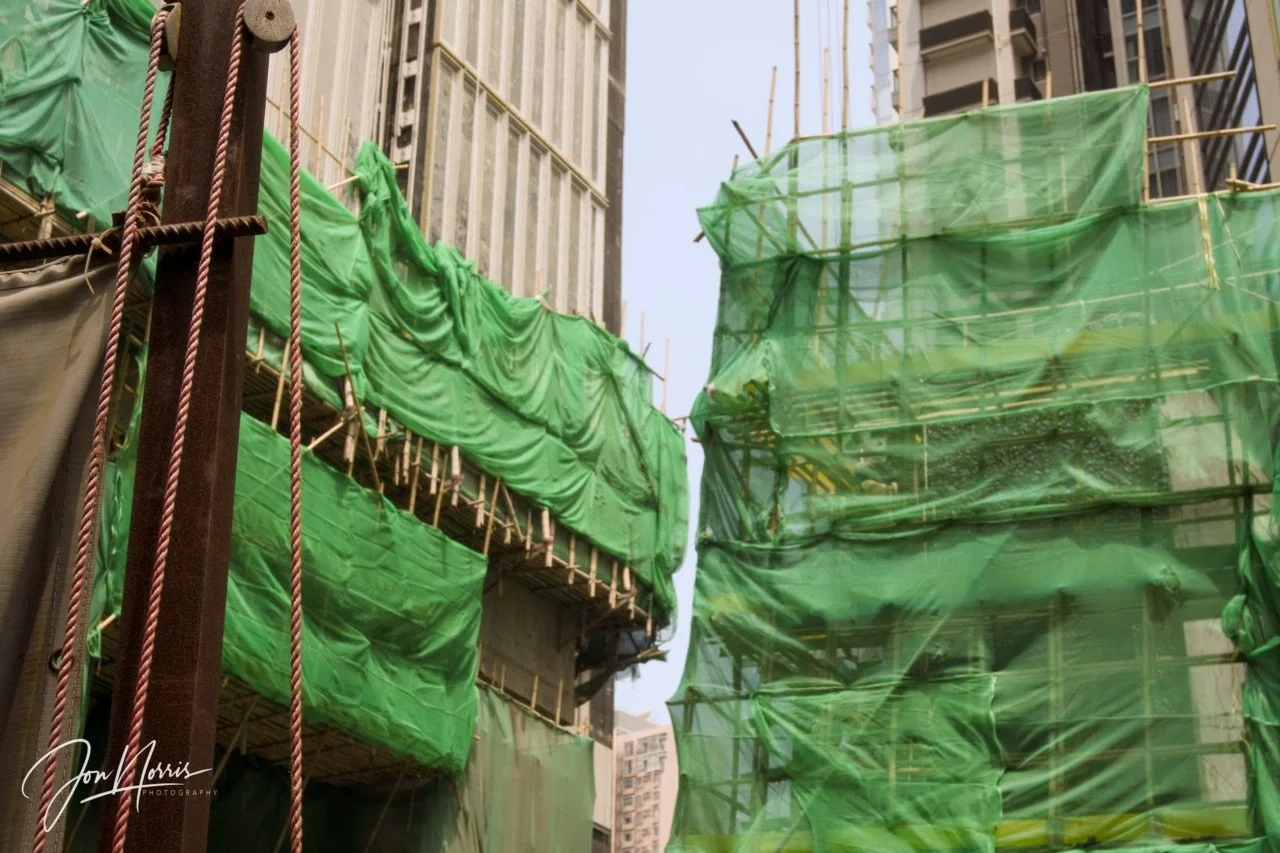
Bamboo scaffolding | © 2026 Jon Norris
Hong Kong Island has the most densely-packed footprint for apartment buildings. It’s typical to see multiple-level apartments above shops and offices. Older public blocks typically range from 10 to 40 stories. The newly built private housing average between 40 and 60 floors. All of the older apartment complexes have a plethora of external air conditioning units spread across their facade.
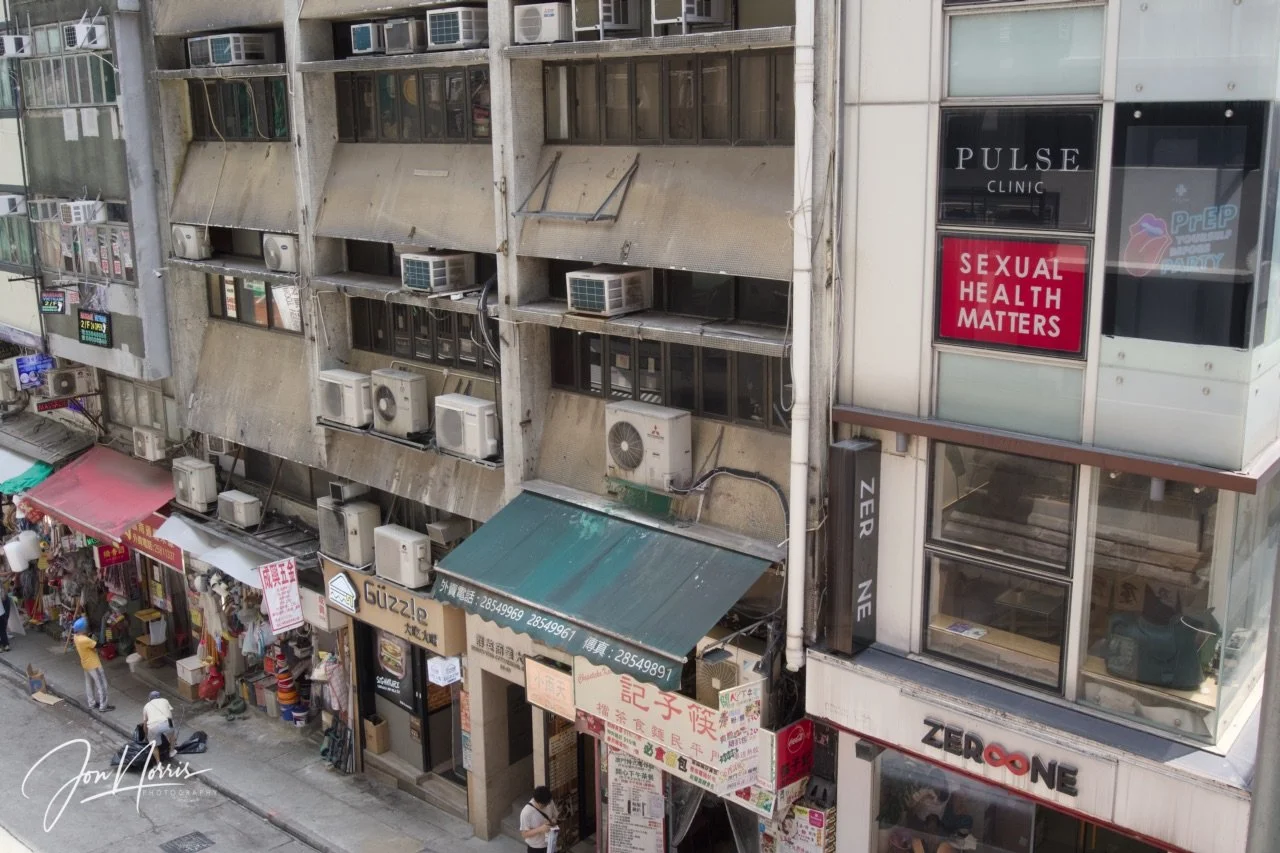
Shops, apartments and offices—all with their a/c units | © 2026 Jon Norris
Another ‘must-do’ trip for me was to take the famous Star Ferry across Victoria Harbour from Central (Hong Kong Island) to Tsim Sea Tsui (Kowloon). The iconic green and white ferries that criss-cross the harbour carry about 70,000 passengers per day (26 million per year). Even though there are road and rail tunnels, the Star Ferry provides an inexpensive scenic mode of harbour crossing. I enjoyed it so much that I went out and back.
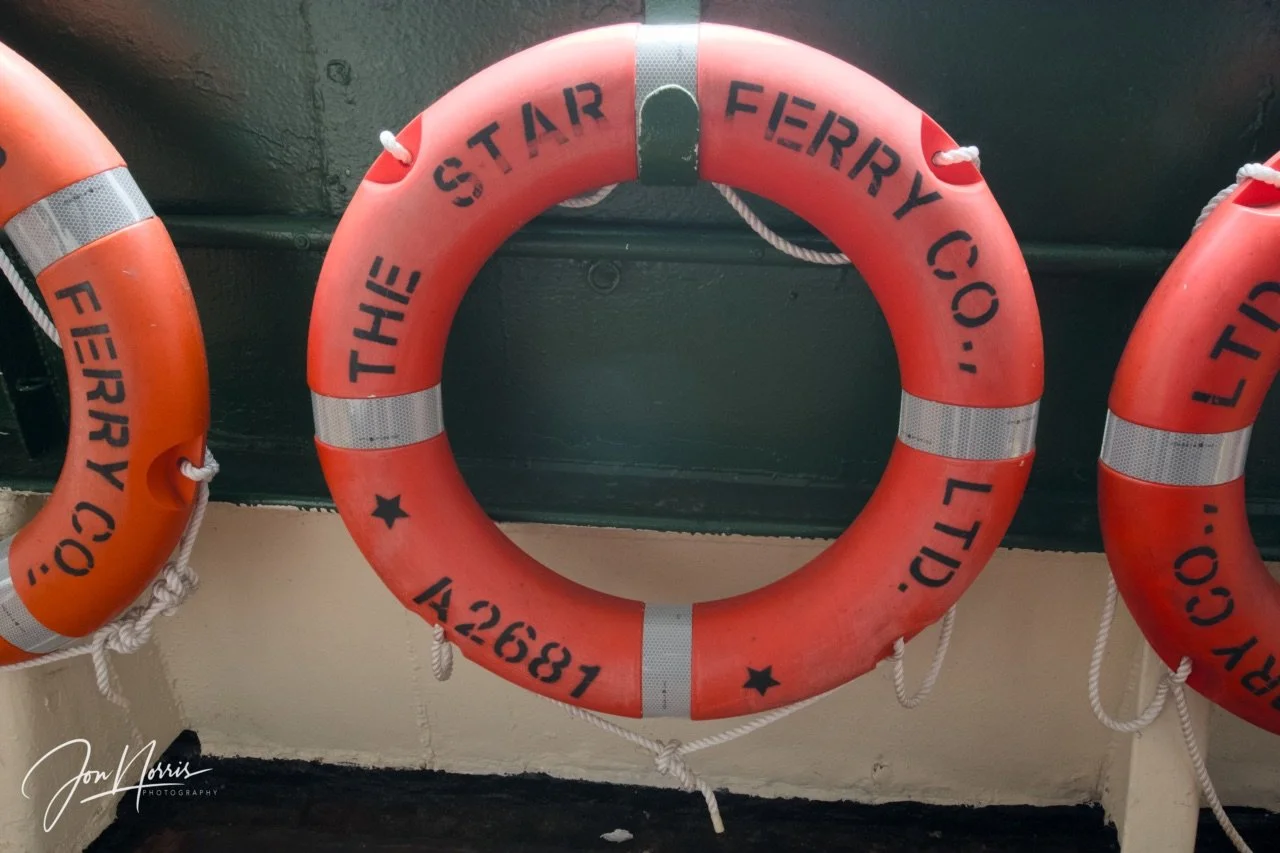
Video and Image: Star Ferry | © 2026 Jon Norris
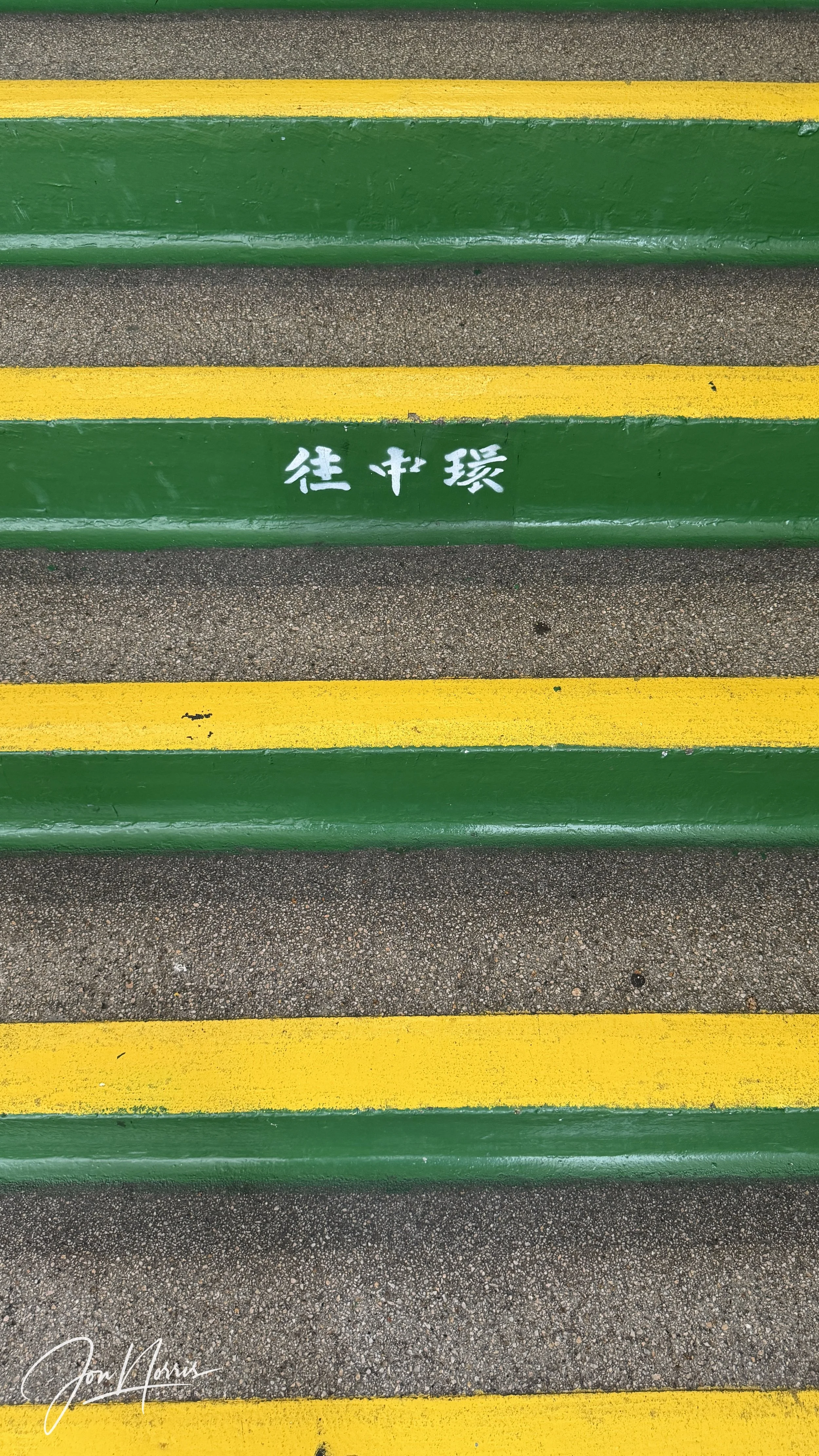
Steps up to the Star Ferry terminal | © 2026 Jon Norris
Hong Kong Tramways is a narrow-gauge tram system that runs across Hong Kong Island from Kennedy Town to Shau Kei Wan. Since its inauguration in 1904 it has used electric trams, rather than starting with horse or steam power. The trams are affectionately known as Ding Dings, after the double-bell ring used by the trams to warn pedestrians of their approach.
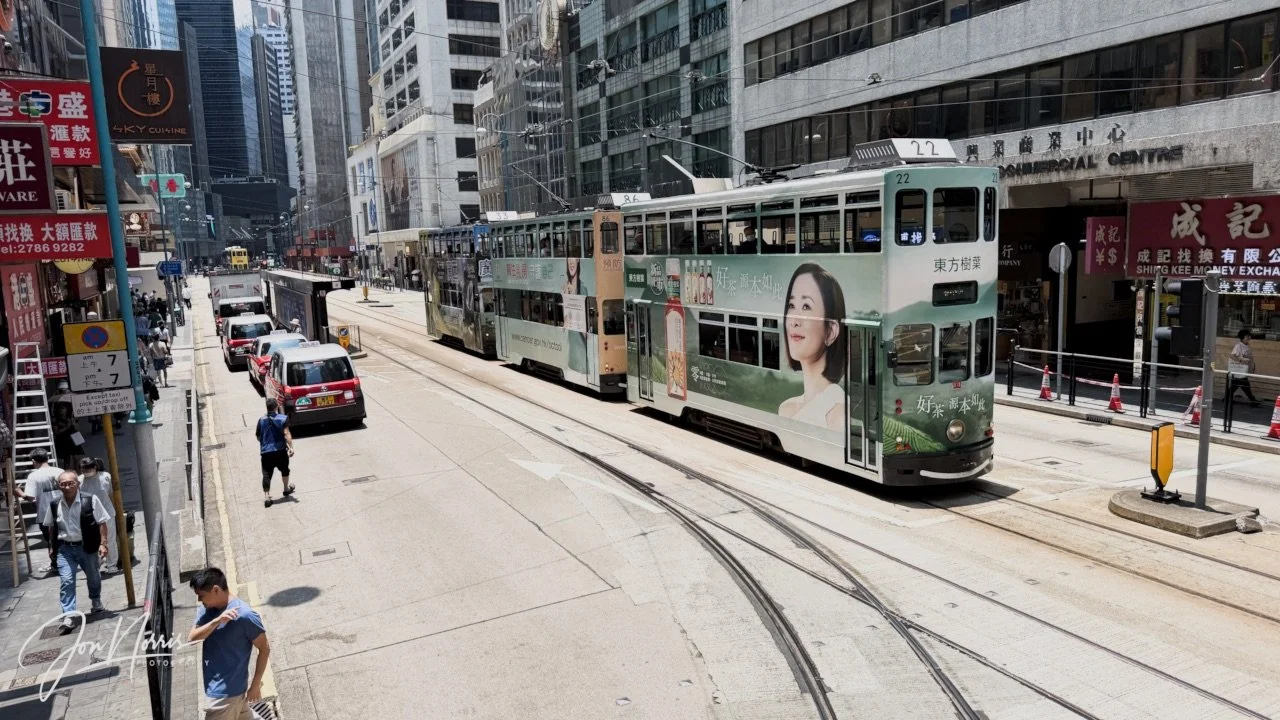
Three Ding Dings queued up at a stop light | © 2026 Jon Norris
In addition to being used by commuters, the Ding Dings are very popular with tourists, and are one of the most environmentally friendly ways of traveling in the city. They’re also great value as the adult fare is just HK$3.3 (USD 0.40) for adults and HK$1.60 (USD 0.20) for children under 12. This fare is fixed for any length of single trip. You get on the tram at the back, and exit at the front near the driver, paying in cash (exact change) or by Octopus (the Hong Kong smart payment card that works on all public transport and for meals in many cafes and take-aways).
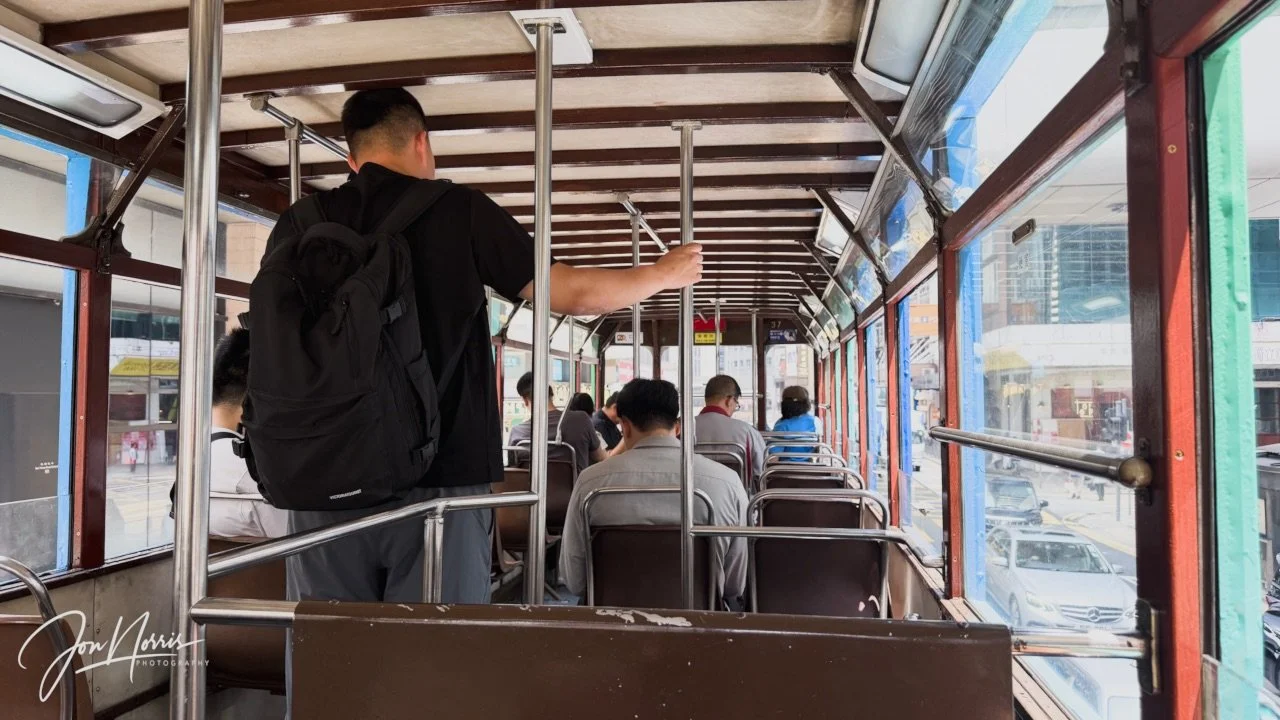
Video and Image: Watching and riding the Ding Dings is a great way to spend a few hours … just don’t be in a hurry | © 2026 Jon Norris
Riding the Ding Dings is a great way of seeing Hong Kong Island, watching the world go by (slowly) and people watching. I made a habit of getting on and heading straight upstairs to bag one of the window seats.
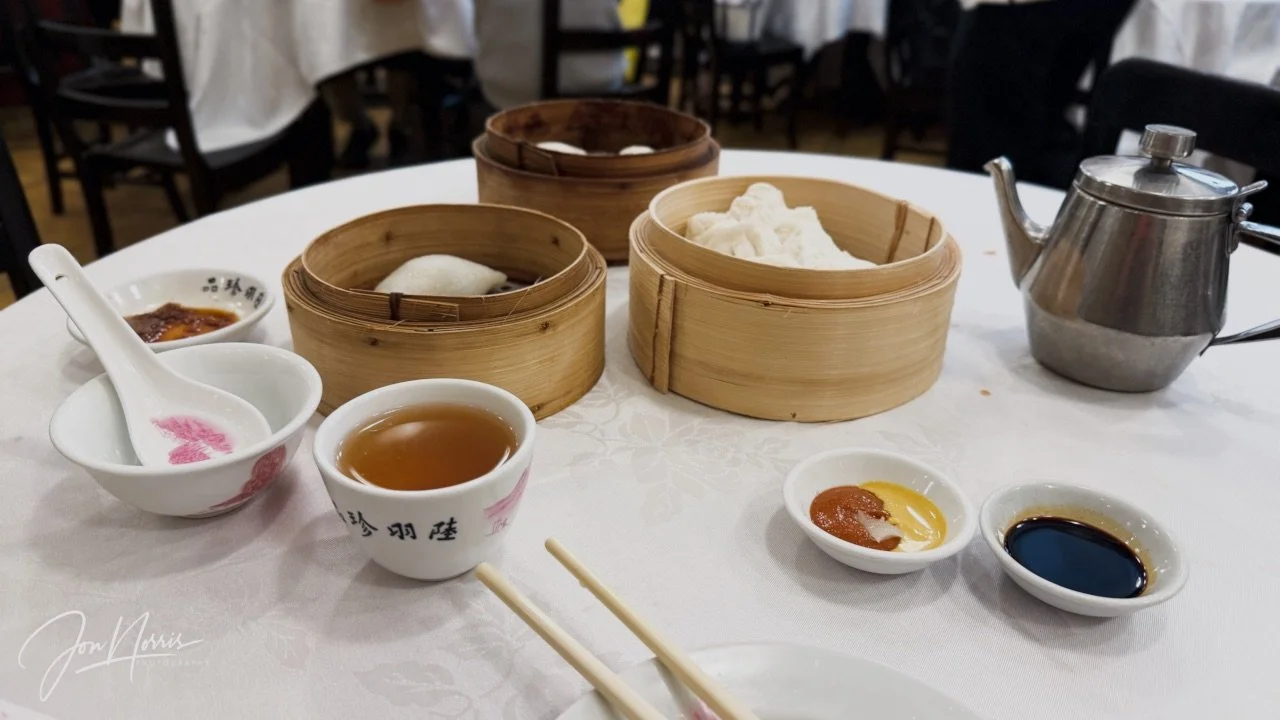
Lunch at the Luk Yu Tea House | © 2026 Jon Norris
After a busy morning exploring and taking multiple modes of transportation I was more than ready for lunch. I discovered (somewhat by chance) the Luk Yu Tea House.
The restaurant features traditionally prepared and flavoursome dim sum, and I’d read that its three floors fill up quickly. The service was friendly but no-nonsense—they wanted to turn tables quickly—the food was delicious.
When I visited Hong Kong in June this year I was disappointed to find out that the Ngong Ping 360 cable car was closed for 2 weeks for maintenance. I was delighted to find out that during my July visit that it was open again. However, I had a small time window to ride the cable car and have good visibility before Typhoon Noul showed up. It was Friday or a no-go as Noul was going to make landfall that evening.
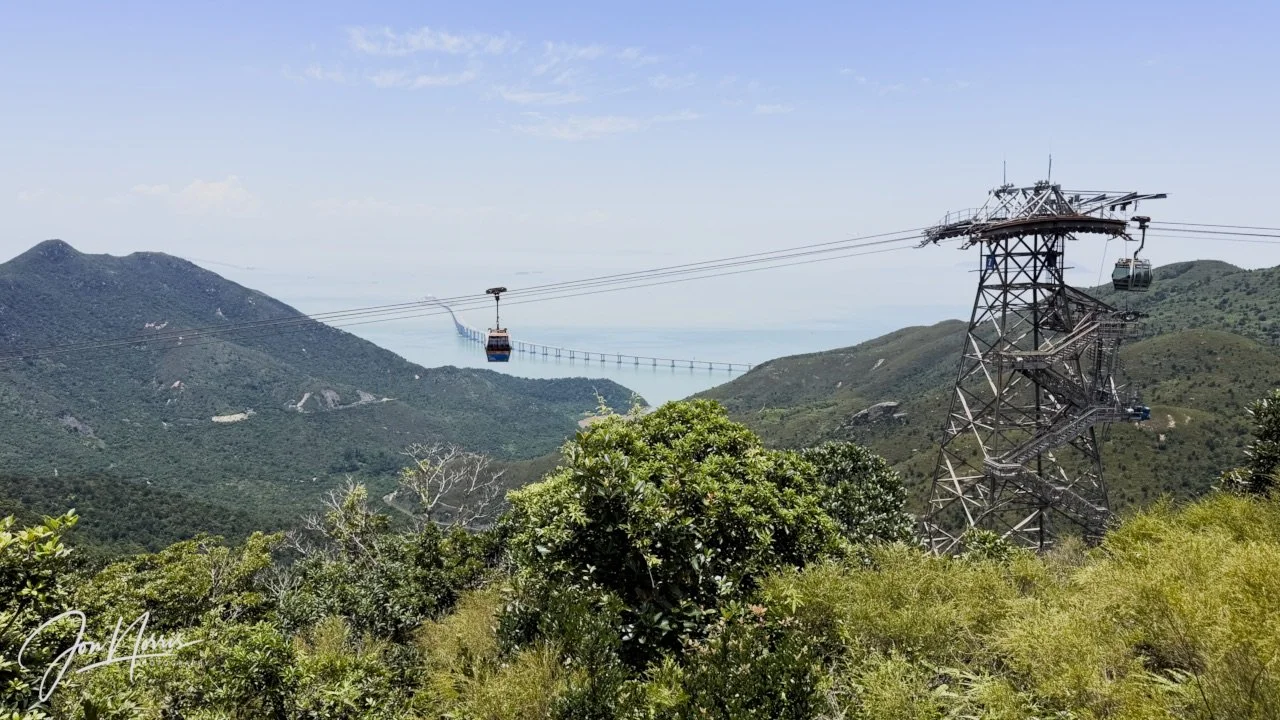
The Ngong Ping 360 cable car close to the summit with the Hong Kong–Zhuhai–Macau Bridge in the background | © 2026 Jon Norris
The cable car connects Tung Chung and Ngong Ping on Lantau Island, and is 3.5 miles (5.7 km) long, rising from near sea level to 1,380 ft (420 m).
The views are stunning as you leave the tower blocks behind you and are carried over a lush green canopy of trees that blanket the Ngong Ping highlands.
There’s a tourist village consisting of overpriced eateries and souvenir shops which I quickly walked past to get to what I wanted to see. My first stop was hiking up to the 360° viewing platform and taking in the majesty of the landscape, Lantau Peak and Nei Lak Shan.
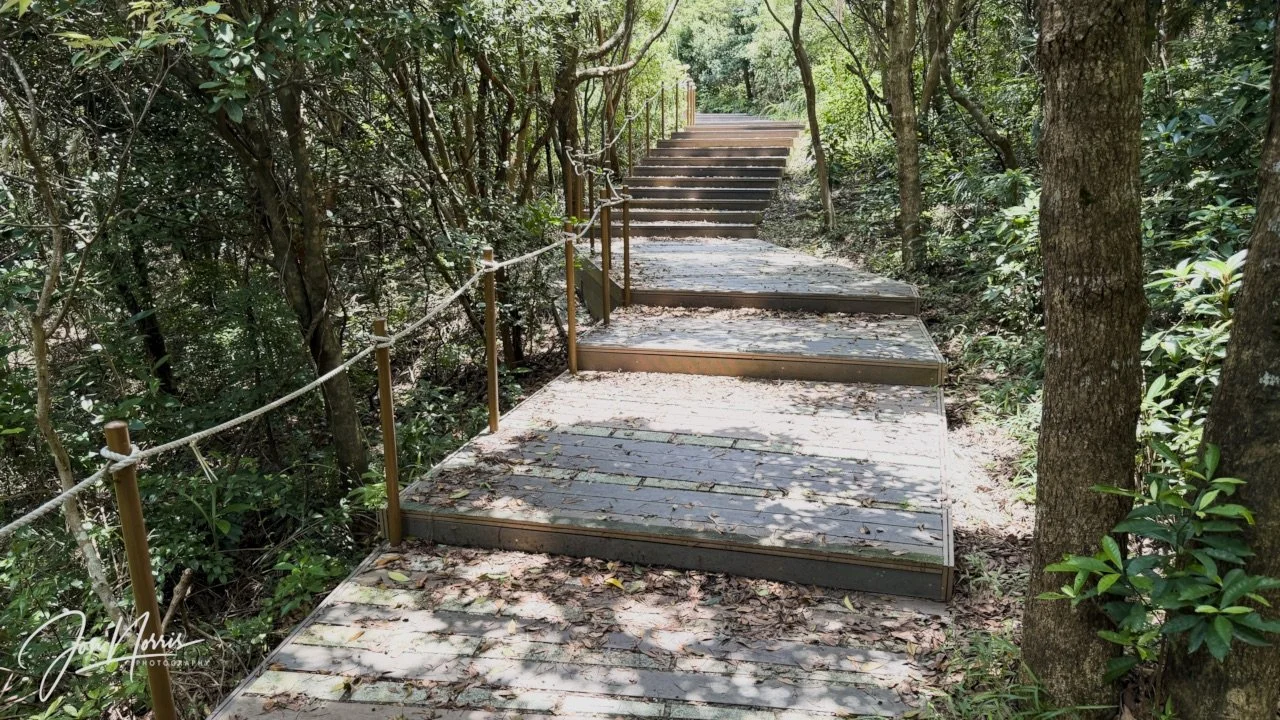
The hike up to the viewing platform was happily deserted | © 2026 Jon Norris
Walking back down the trail I narrowly missed walking straight into a massive spider’s web—complete with a 3-inch long spider. The web spanned the 9-foot (3 m) wide trail.
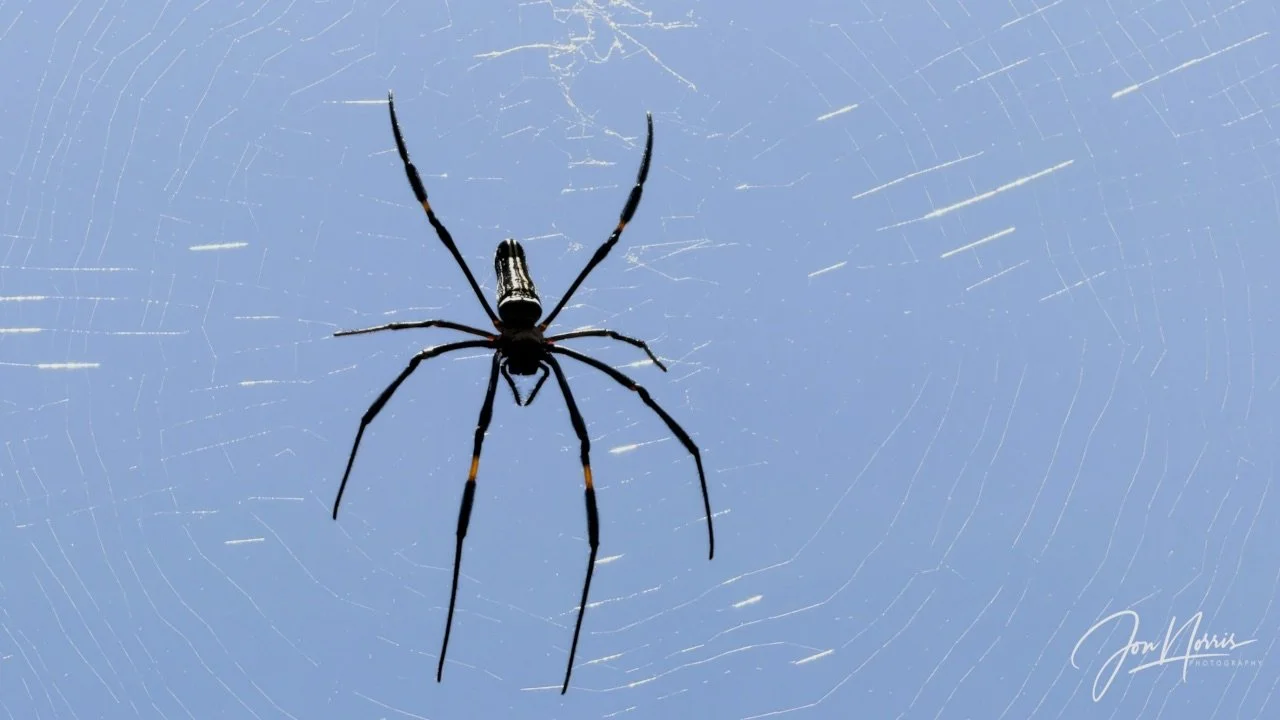
I got a bit to close to this spider—but happily did not disturb it | © 2026 Jon Norris
As you walk through the tourist village you get your first view of the Tian Tan Buddha (otherwise known as the Big Buddha).
You cannot help but be impressed with the shear size of this bronze sculpture—one of the five large Buddha sculptures in China. Completed in 1993, the 112 ft (34 m) tall sculpture weighs over 280 tons (250 metric tons).
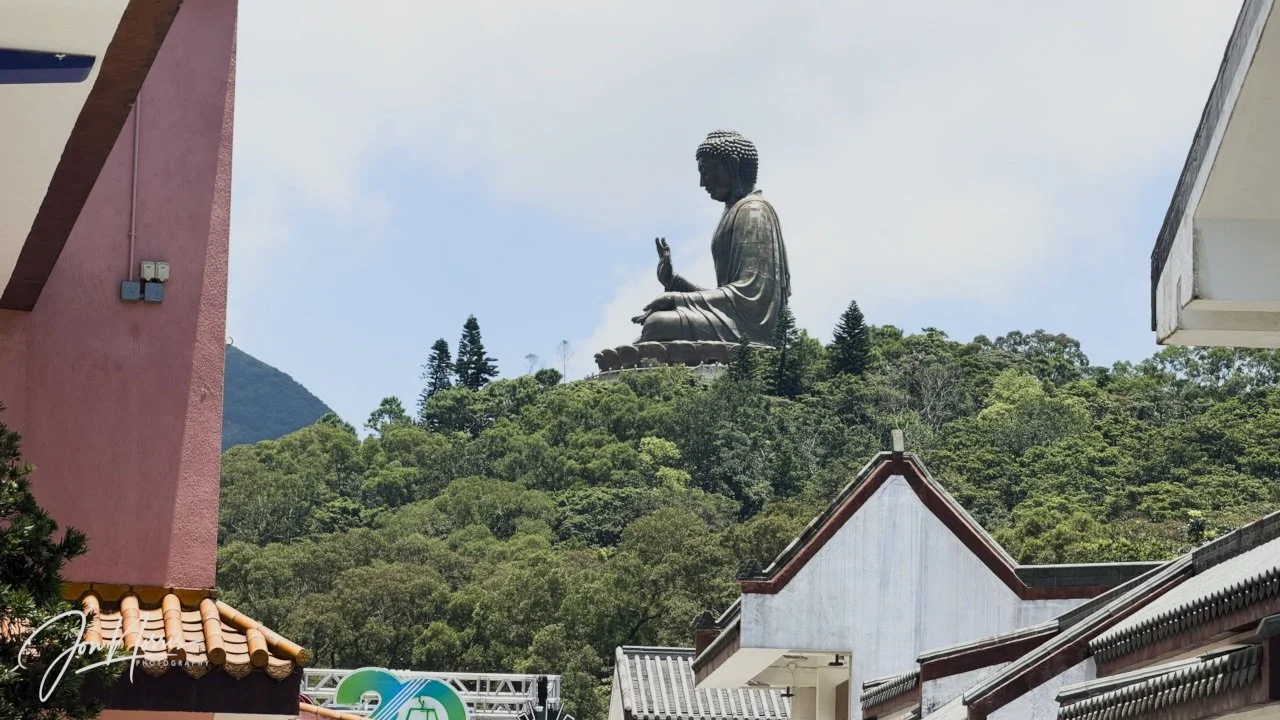
Tian Tan Buddha | © 2026 Jon Norris
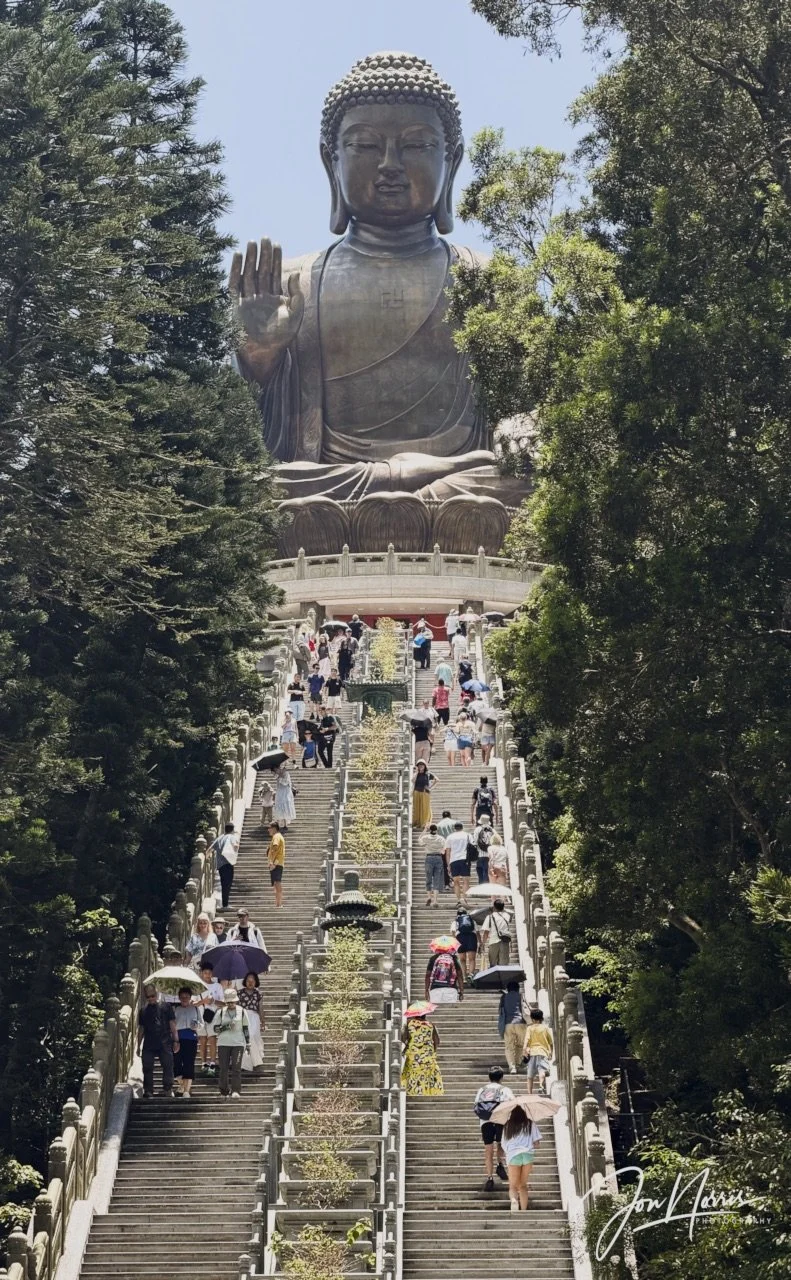
Tian Tan Buddha | © 2026 Jon Norris
The weather was beautiful and I was lucky to have excellent visibility, however, it was 93° F, and I had 268 steps to climb to get a better view of the Big Buddha.
But it was well worth the effort. The sculpture sits atop a lotus on top of a three-platform altar, and as you look down you see the six smaller bronze statues known as the Offering of the Six Devas, posed offering flowers, incense, lamp, ointment, fruit and music to the Buddha.
Regardless of where you lie on the continuum of spirituality it’s difficult not to be moved by the power of this monument and the quiet reverence and worship that many visitors have for this place.
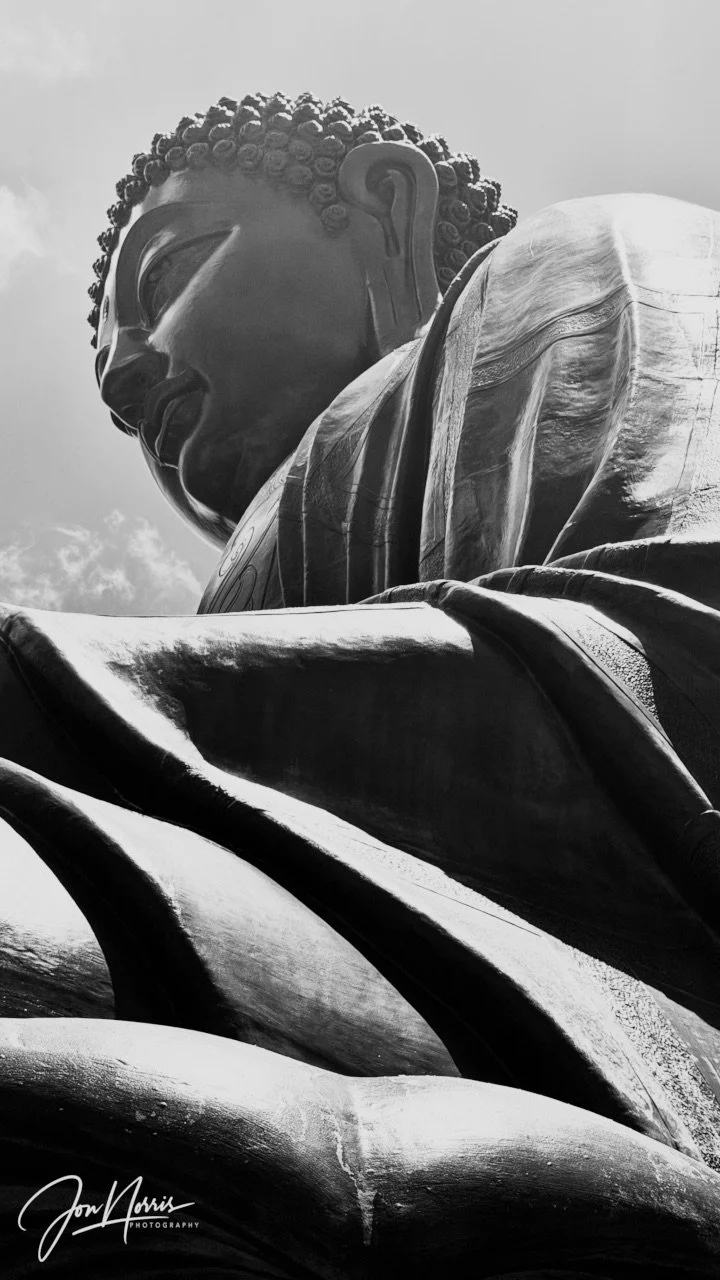
Tian Tan Buddha | © 2026 Jon Norris
Right on cue, as I got back to my hotel close to the airport (on Chek Lap Kok), Typhoon Noul was making its presence known, the wind had picked up significantly, and the rain was now moving sideways.
I spent the weekend indoors the hotel catching up on work and keeping my fingers crossed that Typhoon Noul wasn’t going to delay my departure.
Luckily, Noul got downgraded to a Tropical Storm, and while my flight back to LAX was delayed by 2 hours, it wasn’t cancelled, which I was hugely grateful for.
Until next time. I need to go and pack for my backpacking trip across the Eastern Sierra which starts in a few days time.
