Explore Landscapes #115
Setting the scene from Part 3: After exploring the monastery we had a beautiful walk downhill through the neighboring forest and into the beautiful Phobjikha Valley.
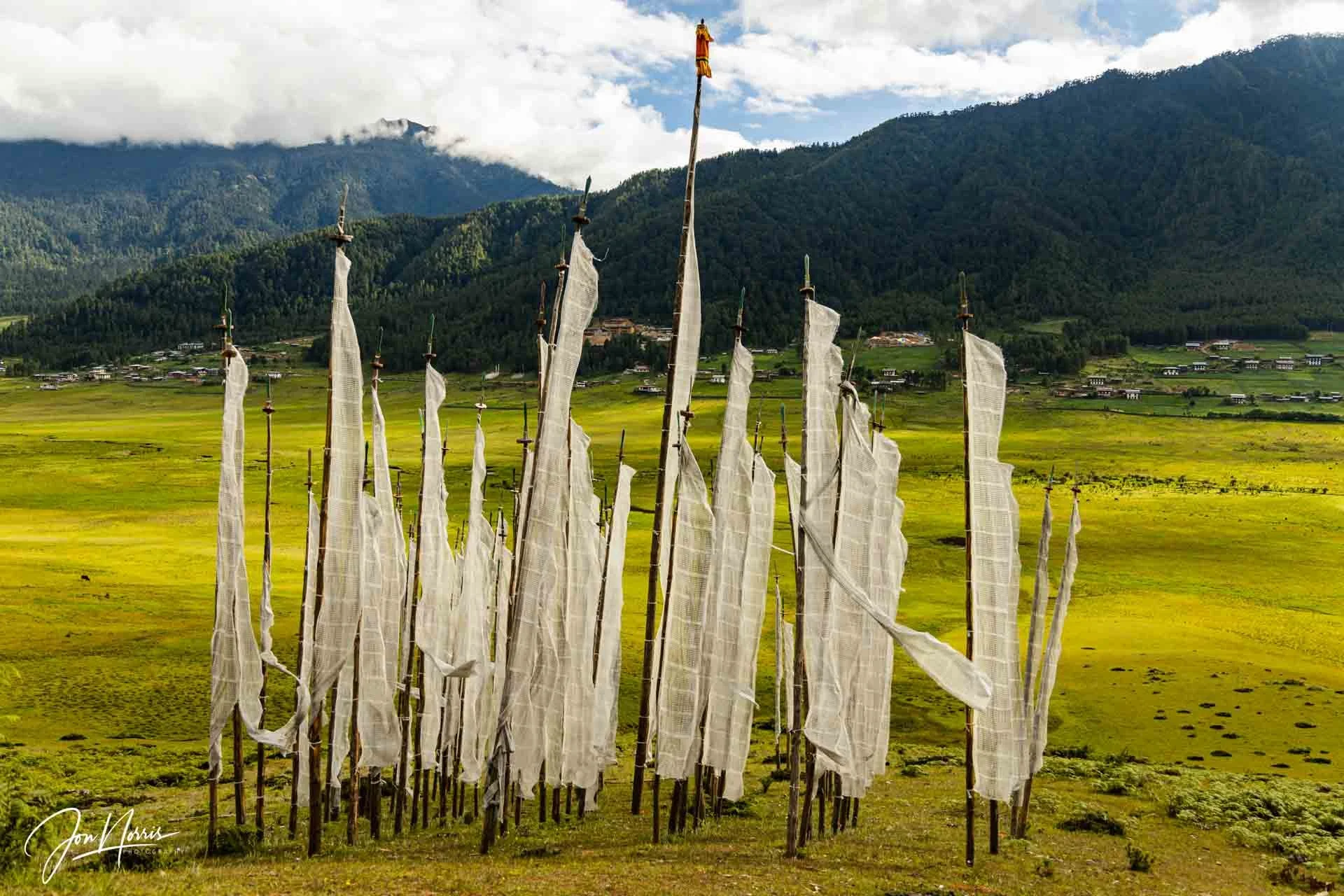
Phobjikha Valley, Wangdue Phodrang, Bhutan | © 2019 Jon Norris
In June 2019, as part of my 50th birthday celebrations (thanks to my lovely wife, Jackie) I was lucky enough to visit the Himalayan country of Bhutan. I’ve been meaning to finish and publish the last two installments of my photographic tour of Bhutan for some time now. They’ve sat (incomplete) in my drafts folder quietly nagging away at me.
If you’d like to read the first three parts you’ll find them linked below:
Setting the scene from Part 3: After exploring the monastery we had a beautiful walk downhill through the neighboring forest and into the beautiful Phobjikha Valley.
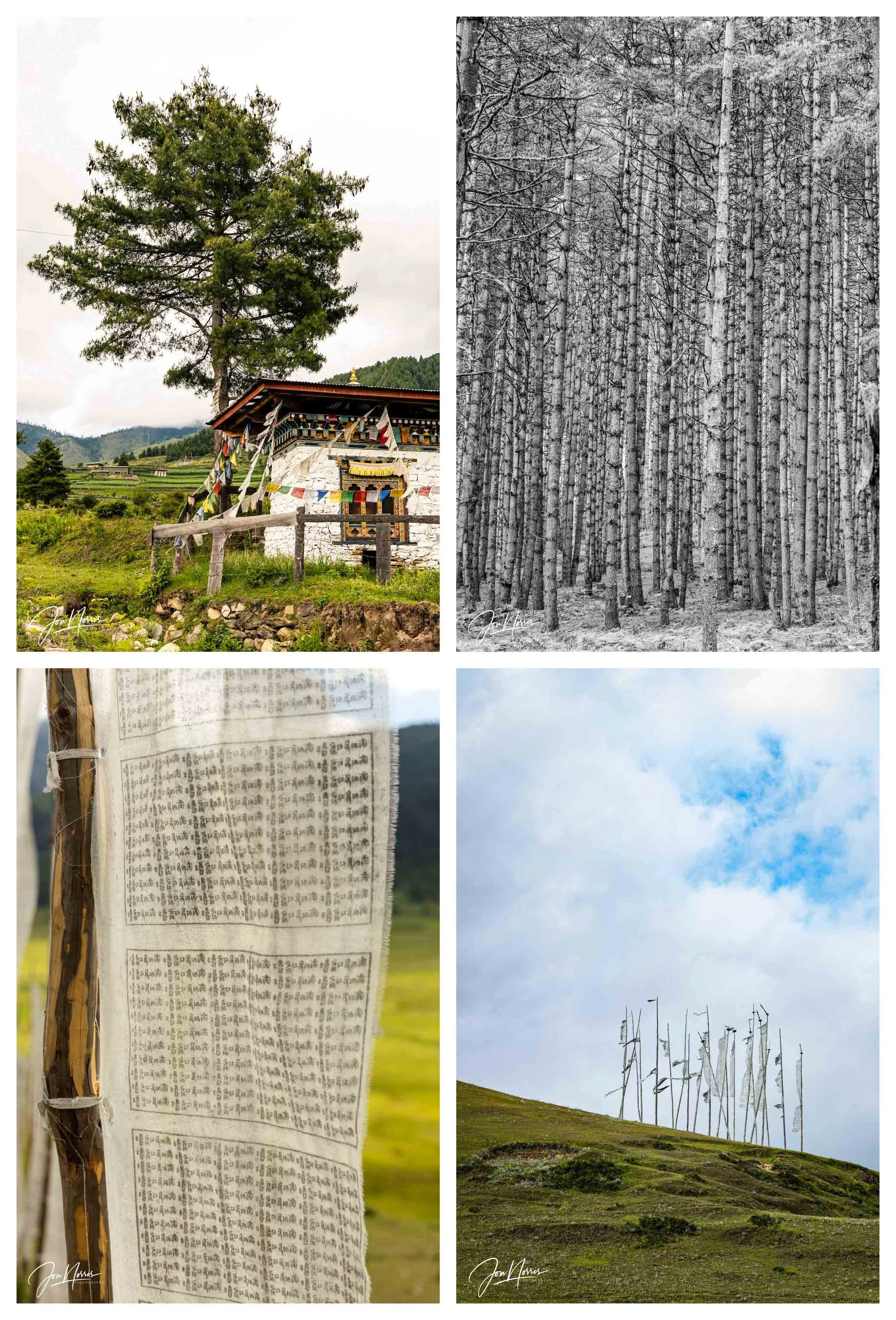
Phobjikha Valley, Wangdue Phodrang, Bhutan | © 2019 Jon Norris
The forest was densely packed with trees, each of which stood vertically next to its neighbors with very little room between them. As the trail flattened out into the base of the valley, and the forest was behind us, there were multiple locations where tall vertical white prayer banners flapped in the wind.
After a good night’s rest our first stop of the day was at the local school, Bayta Primary School, in Gangtey, Phobjikha Valley. Karma (our tour guide and owner of Bhutan Lilly Travels), had organized a visit to the school so that we could meet the teacher and pupils.
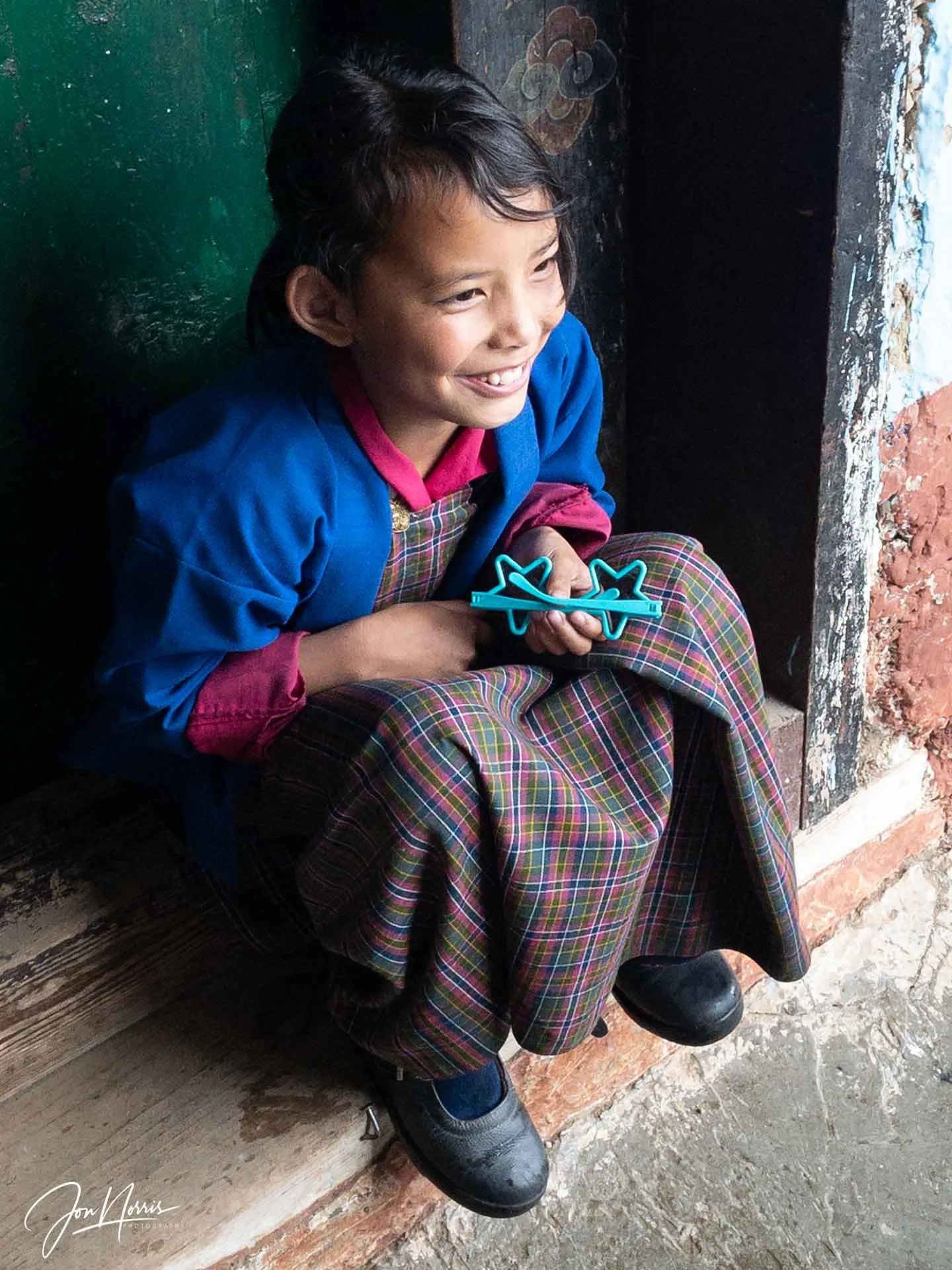
A young girl in traditional Bhutanese dress shares a smile | © 2019 Jon Norris
Despite the rainy morning we had a wonderful time interacting with the children and learning a little about how this school provides a comprehensive curriculum and a unique learning environment that emphasizes cultural preservation.
In Bhutan, English is the primary language of instruction for all subjects except for the national language, Dzongkha.
The children were thrilled to have visitors and kept us all entertained. The school actively integrates SMART learning, STEM initiatives, and interactive education (a student-centered educational approach that replaces passive lectures with hands-on activities, collaboration, and real-time feedback).
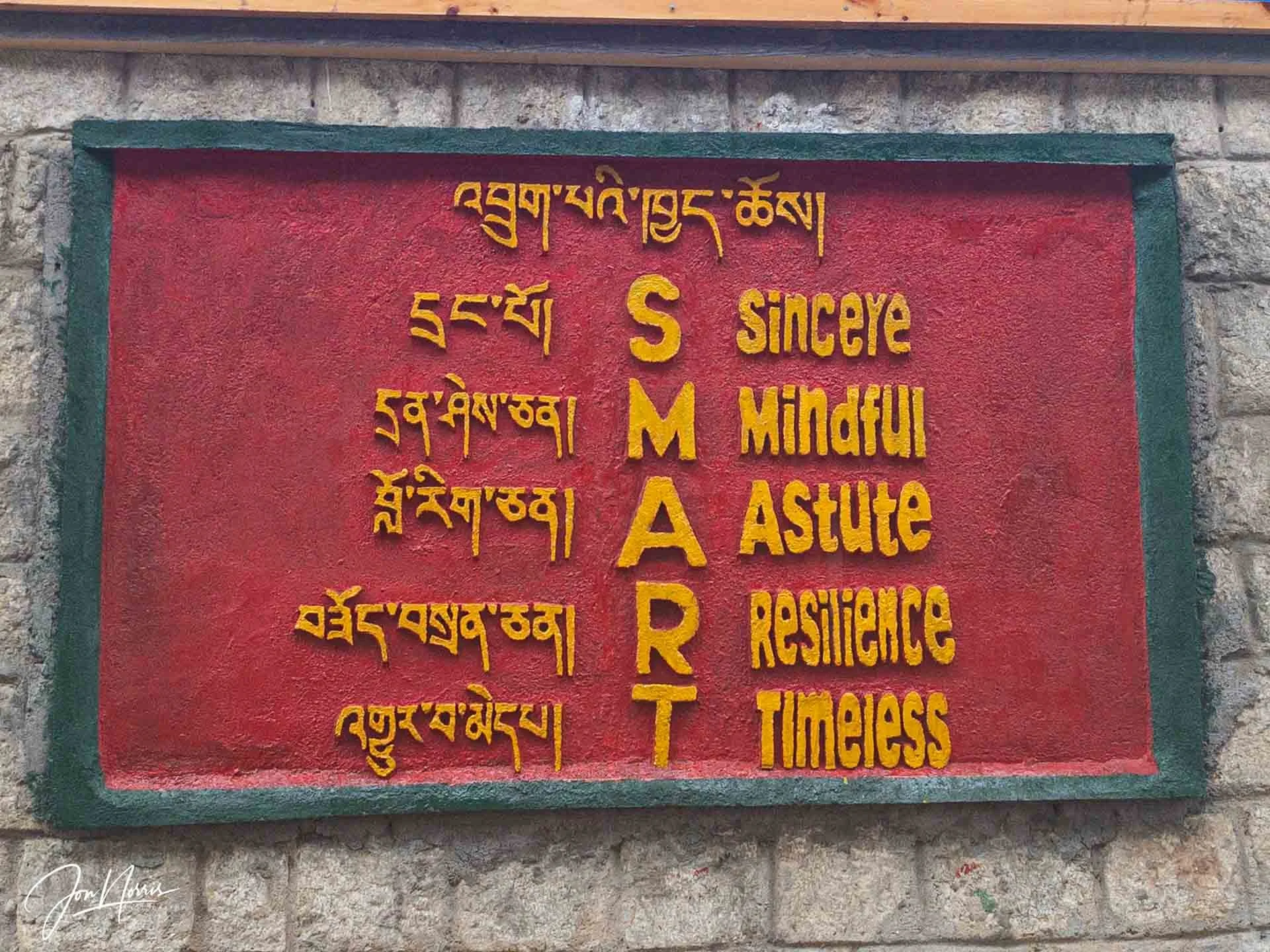
Bayta Primary School’s SMART approach to learning and life | © 2019 Jon Norris
Next stop on our drive back towards Thimphu was Lobesa. We spent some time at the vegetable market. I have never seen so many chillis. Ema datshi made very spicy with cheese and chilies, might be called the national dish for its ubiquity and the pride that the Bhutanese have for it. During our trip we had it with every meal (except breakfast).
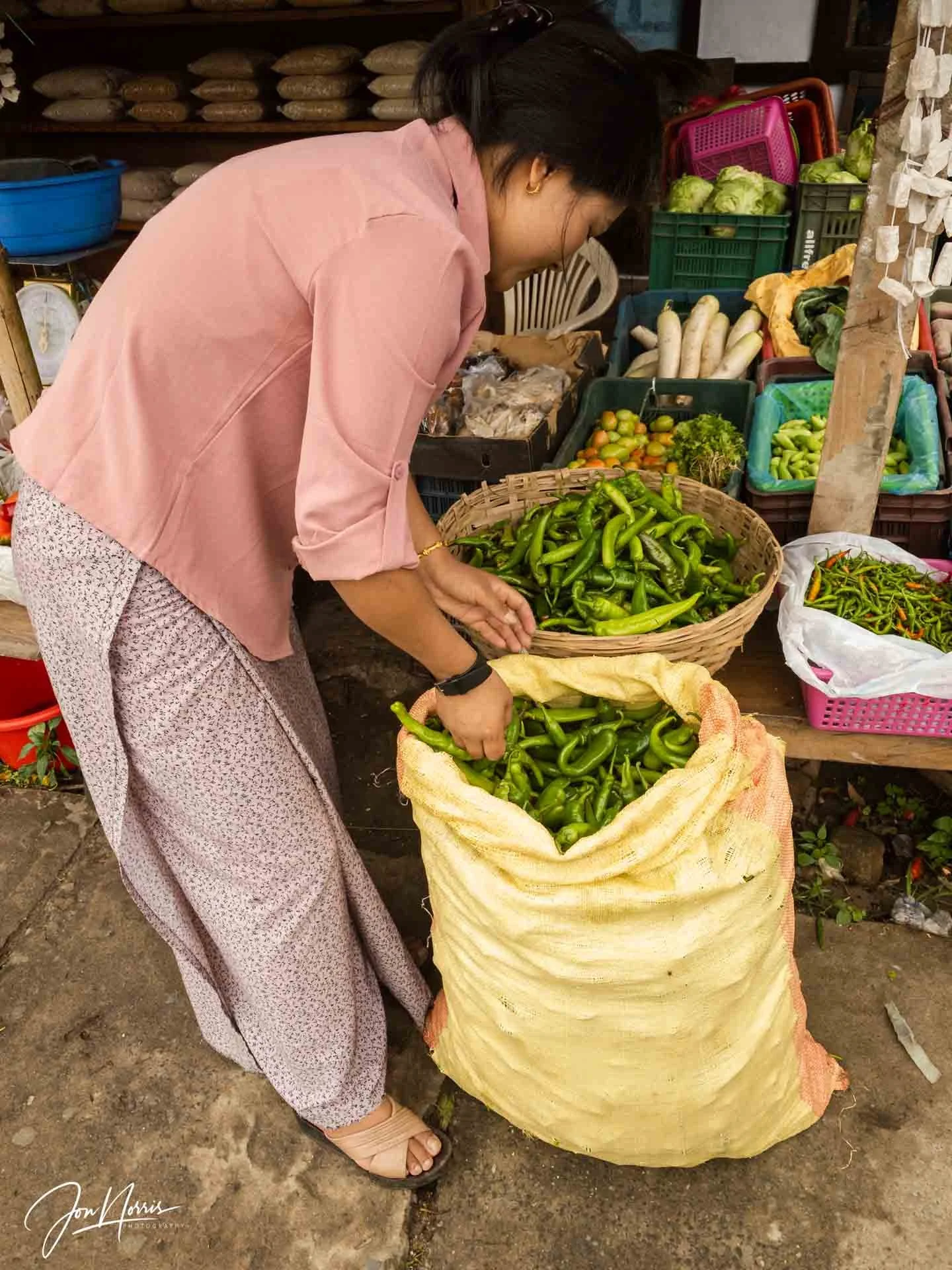
Chili shopping time at the vegetable market in Lobesa | © 2019 Jon Norris
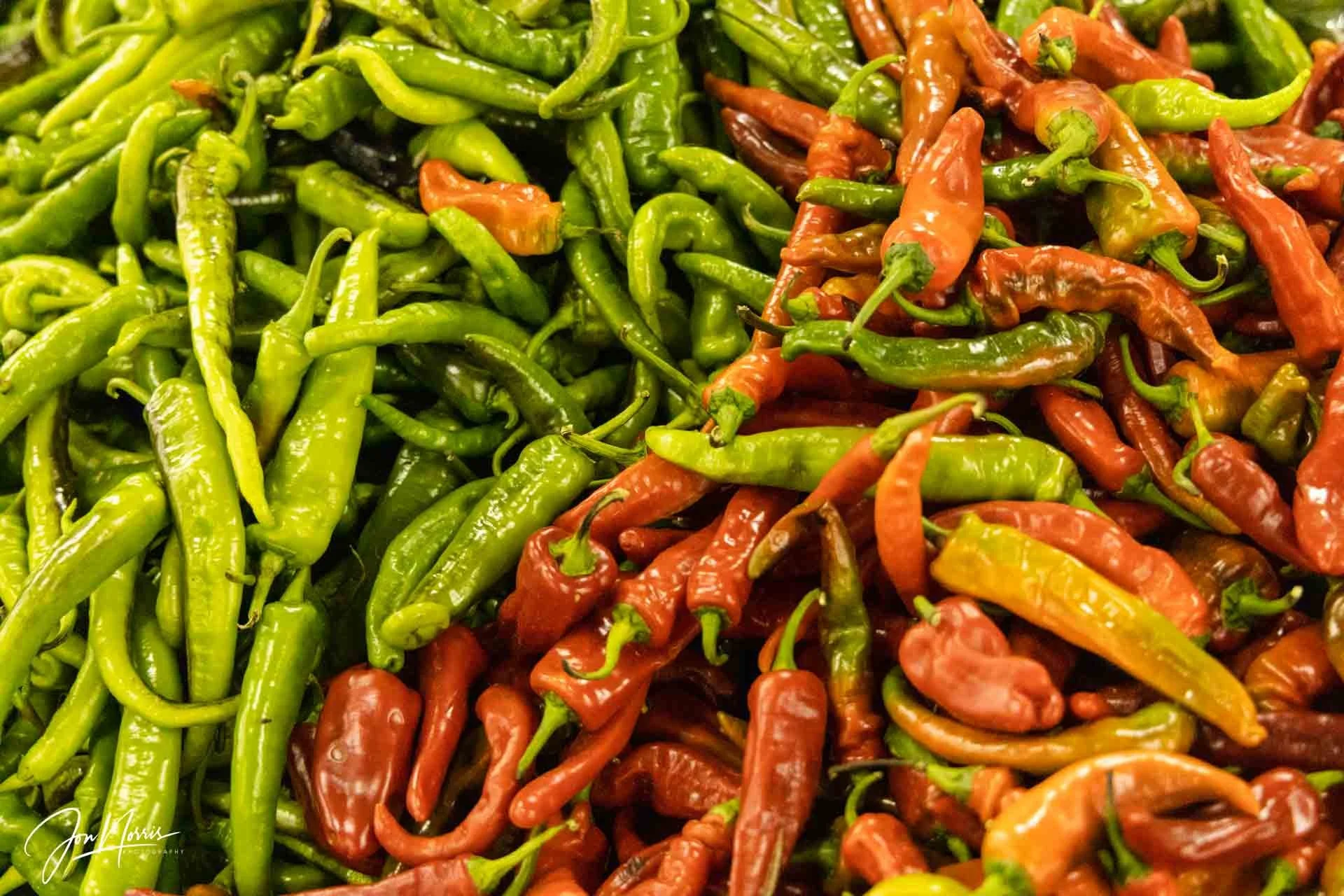
Take your pick … green or red chilis? | © 2019 Jon Norris
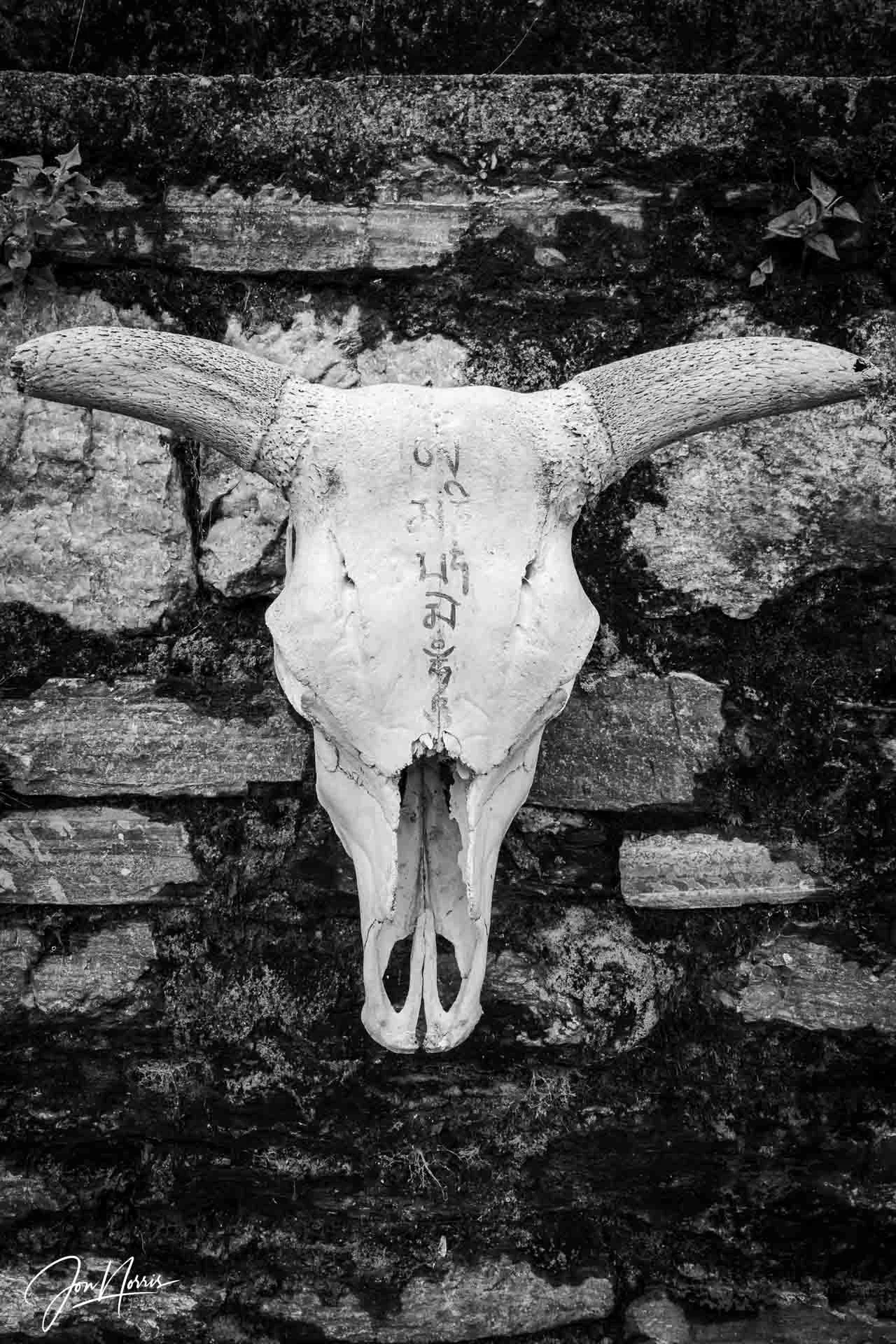
Wall adornment in Lobesa | © 2019 Jon Norris
After lunch we headed to Simtokha Dzong (also known as Sangak Zabdhon Phodrang - the ‘Palace of the Profound Meaning of Secret Mantras’). It was built in 1628 by Zhabdrung Ngawang Namgyal, who unified Bhutan, and is an important historical monument and former Buddhist monastery. Today it houses one of the leading Dzongkha language learning institutes.
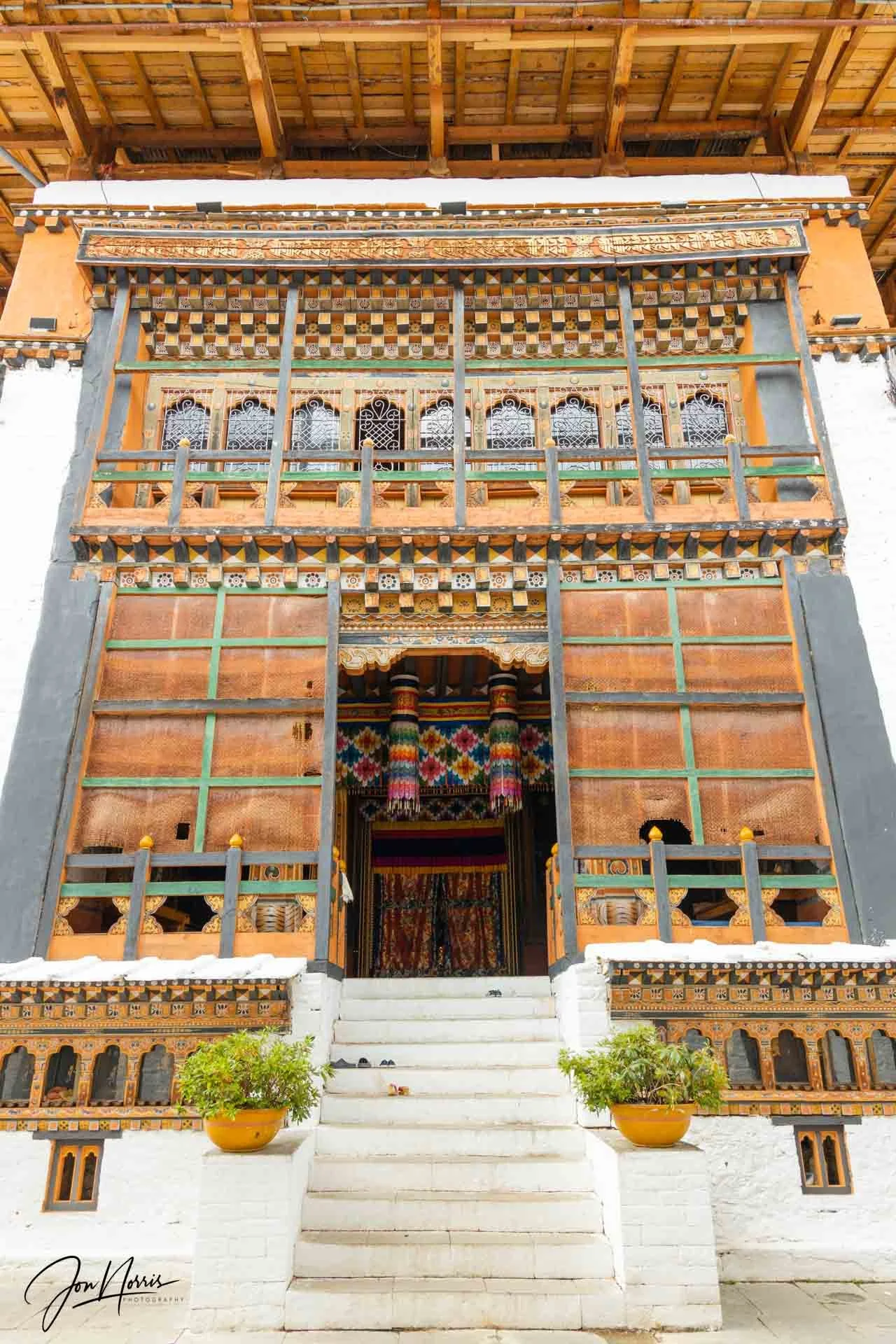
Simtokha Dzong, Thimphu | © 2019 Jon Norris
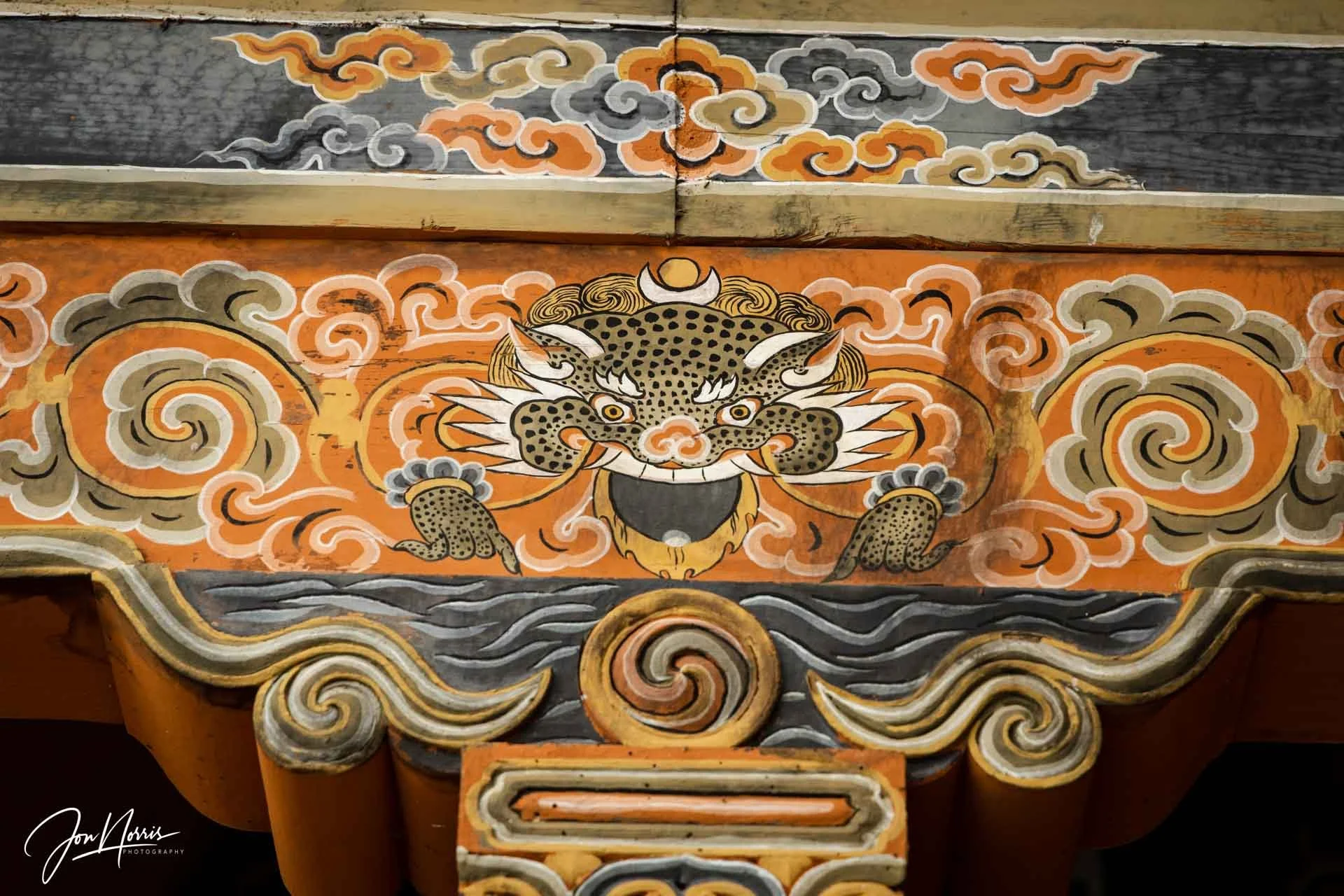
Simtokha Dzong, Thimphu | © 2019 Jon Norris
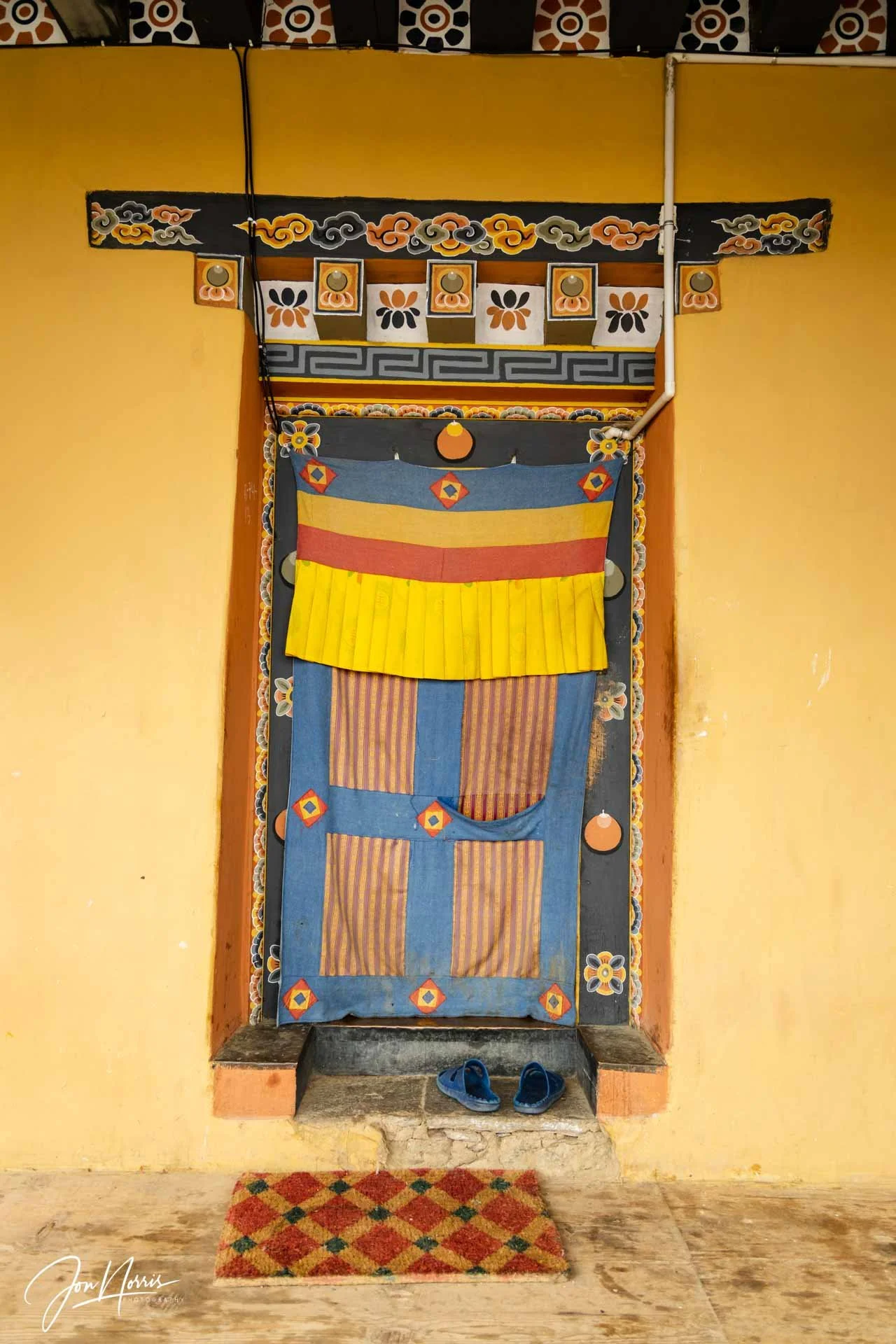
Simtokha Dzong, Thimphu | © 2019 Jon Norris
Once back in Thimphu we enjoyed watching a traditional game of archery. Archery was declared the national sport of the kingdom in 1971, when Bhutan became a member of the United Nations. Bhutan also maintains an Olympic archery team.
Archery in Bhutan is culturally distinctive because it is a martial art practiced among a modern population that abhors killing. Bhutanese people from all walks of life find archery one of the most enjoyable sports, being both fun and physical exercise.
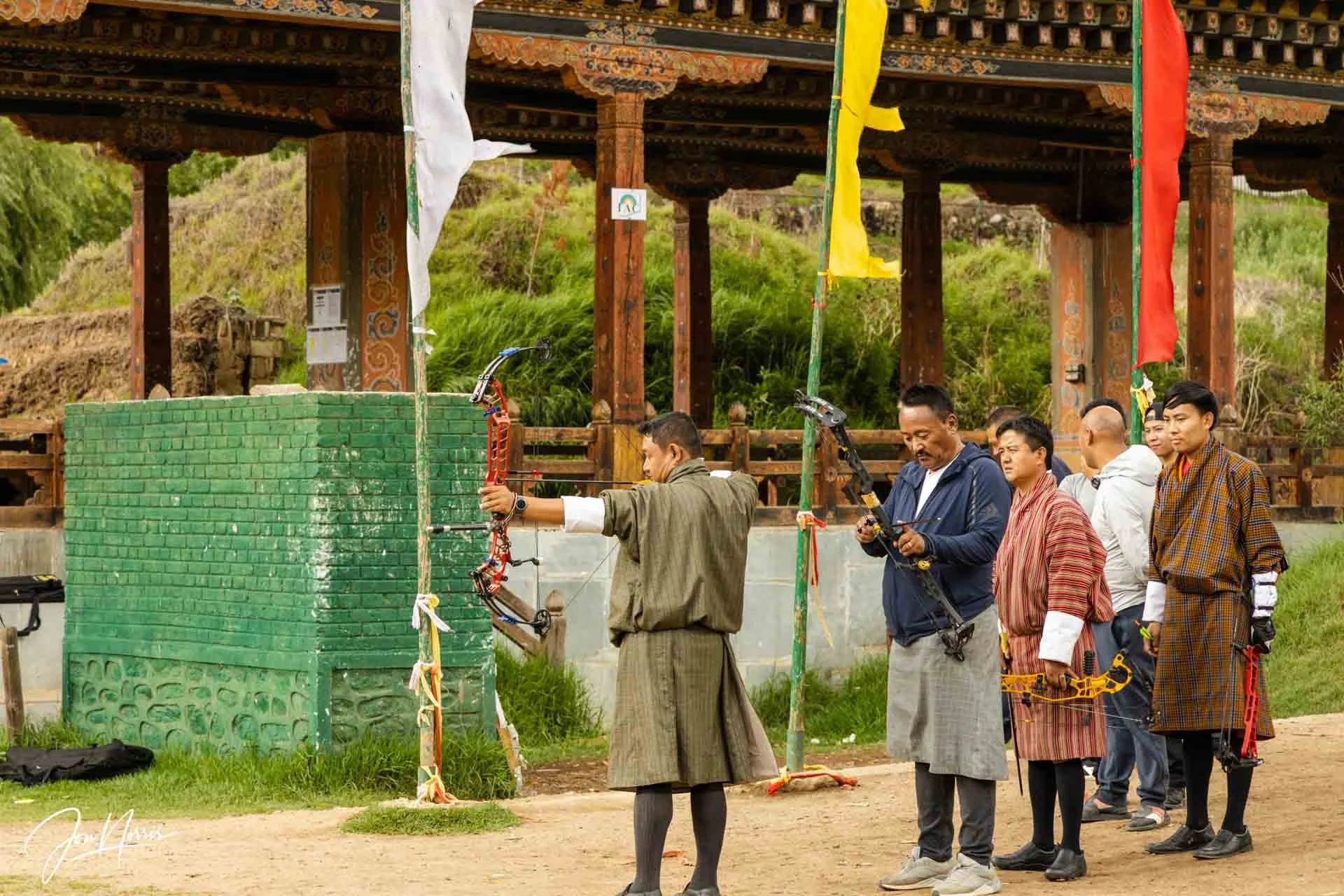
A game of archery in Thimphu | © 2019 Jon Norris
First thing the following morning we drove up to the highest point you can reach by road in Bhutan, the Chele La Pass outside Paro (13,084 ft / 3,988 m). Located on the Bondey-Haa Highway, it divides the Paro and Haa valleys. It is famous for panoramic views of snow-capped Mount Jomolhari (24,035 ft / 7,326 m), a mountain in the Himalayas straddling the border between Tibet, China, and Bhutan. We arrived up at the pass in the fog, so visibility was limited—but atmospheric. The pass is covered in chorten, prayer flags (both colored and white) and prayer wheels.
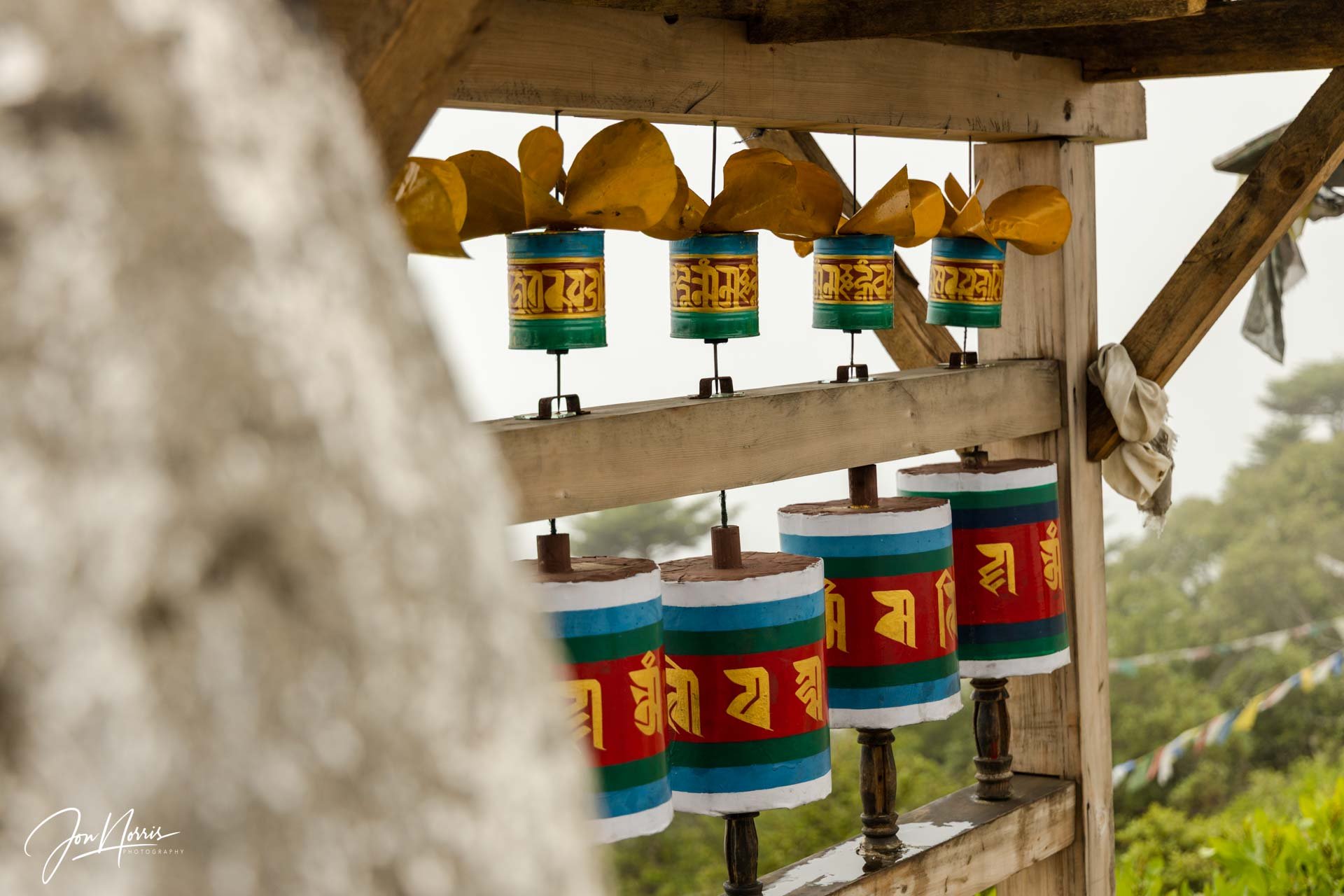
Prayer wheels at Chele La Pass | © 2019 Jon Norris
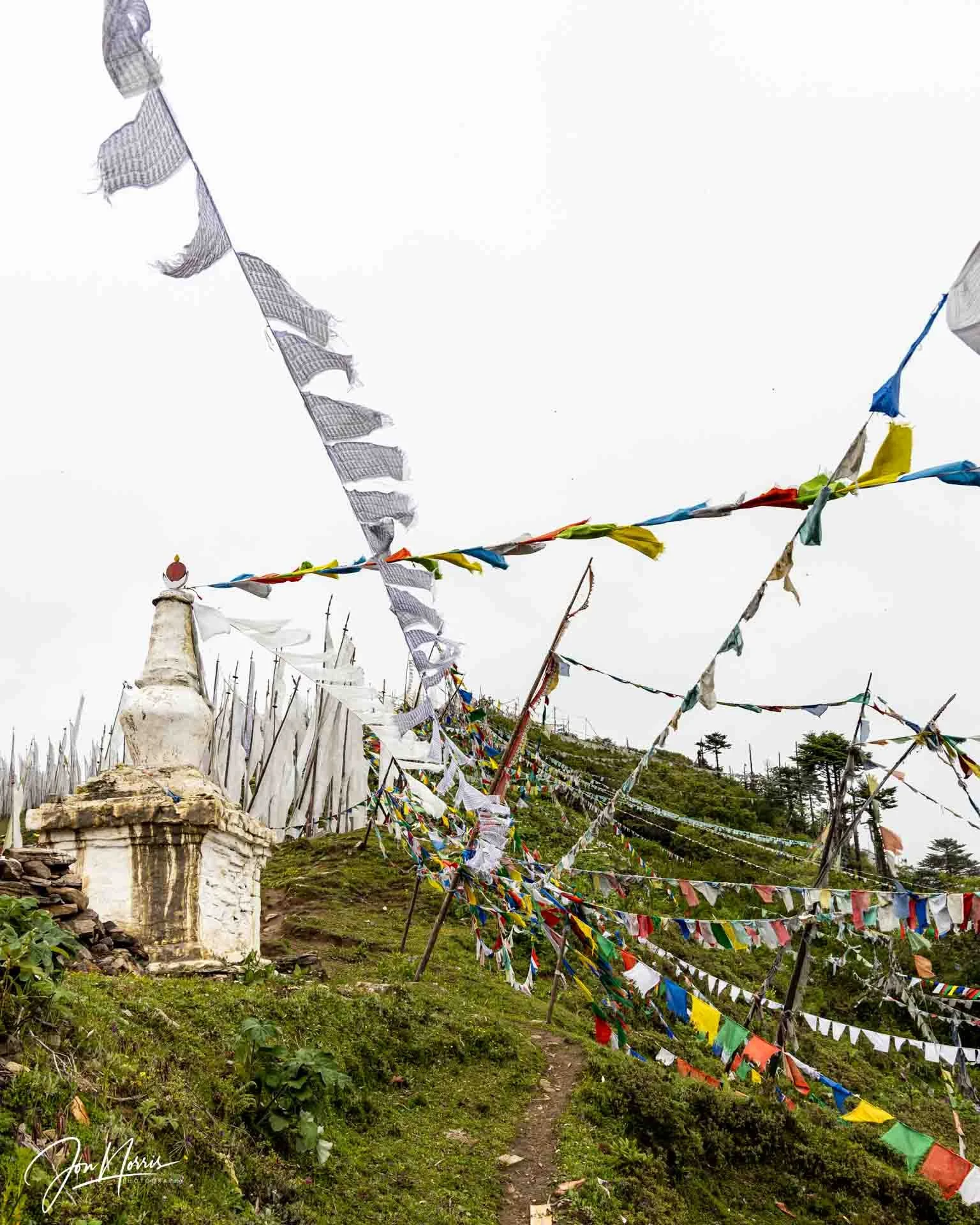
A chorten and prayer flags at Chele La Pass | © 2019 Jon Norris
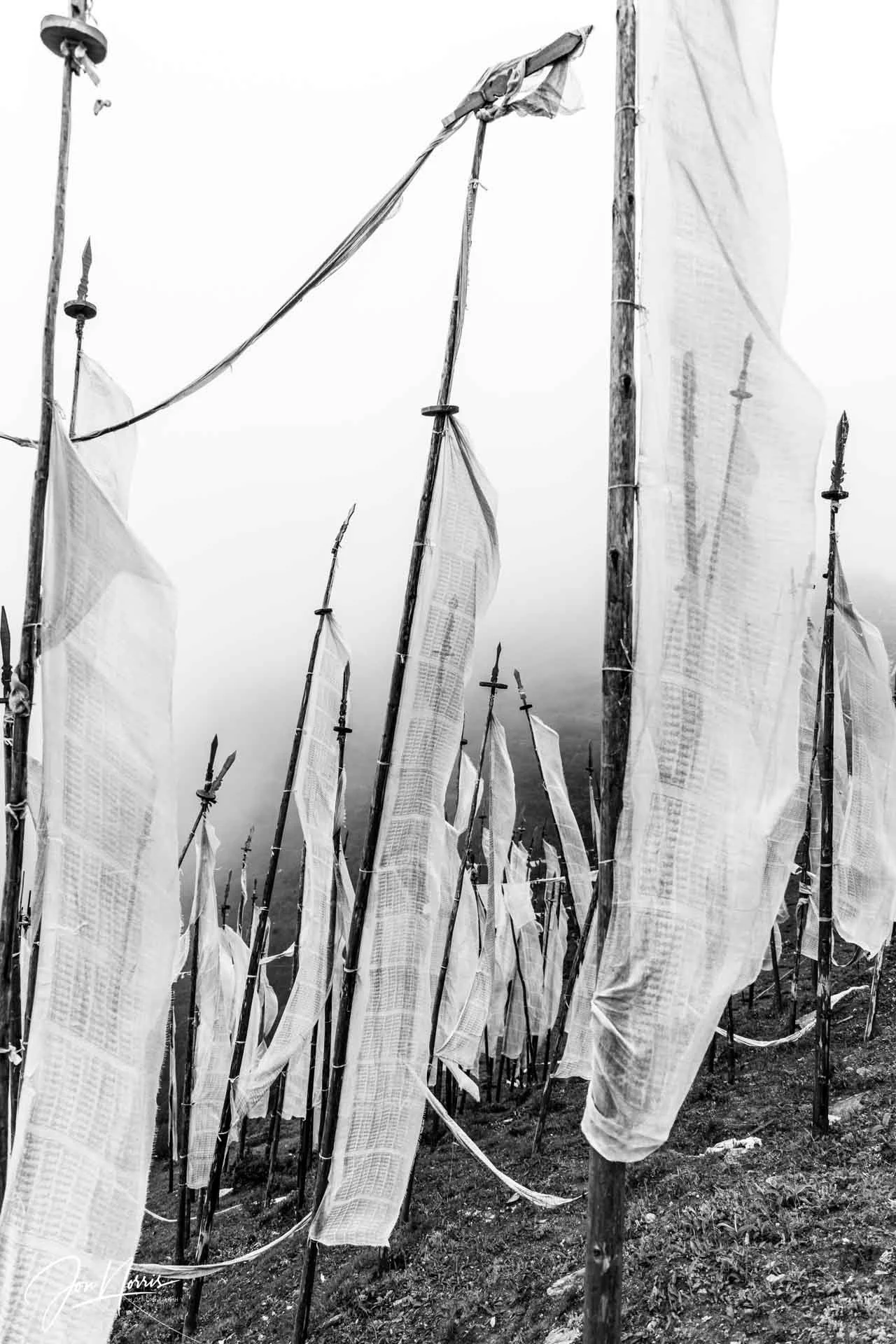
Prayer flags at Chele La Pass | © 2019 Jon Norris
After soaking in the atmosphere at the pass, we hiked along the Chele La Ridge and through a lush forest that was full of the most amazing purple flowers (Iris clarkei). As the trees thinned we got the first view of our next destination, the Kila Goenpa Nunnery.
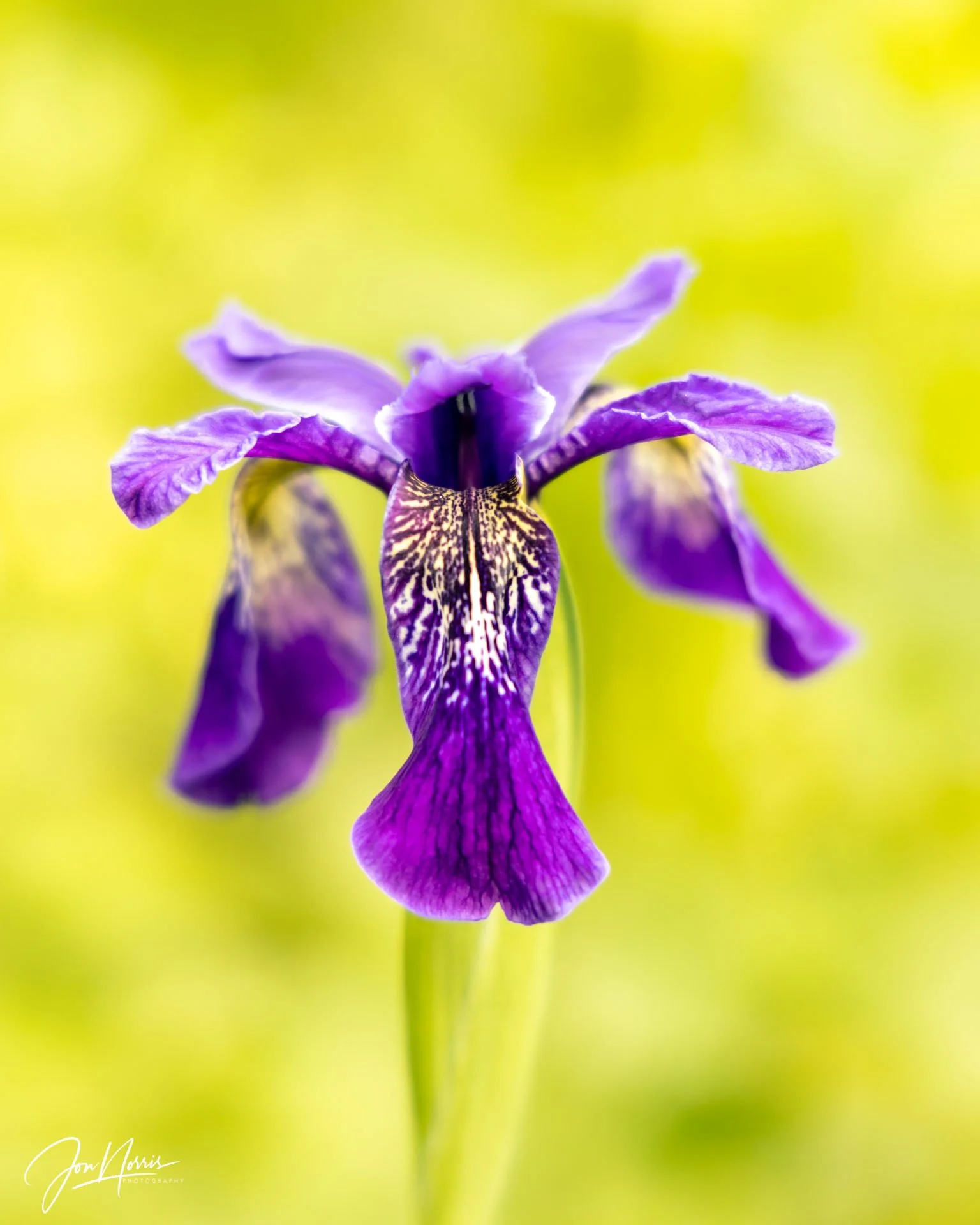
Iris clarkei, Chele La Ridge | © 2019 Jon Norris
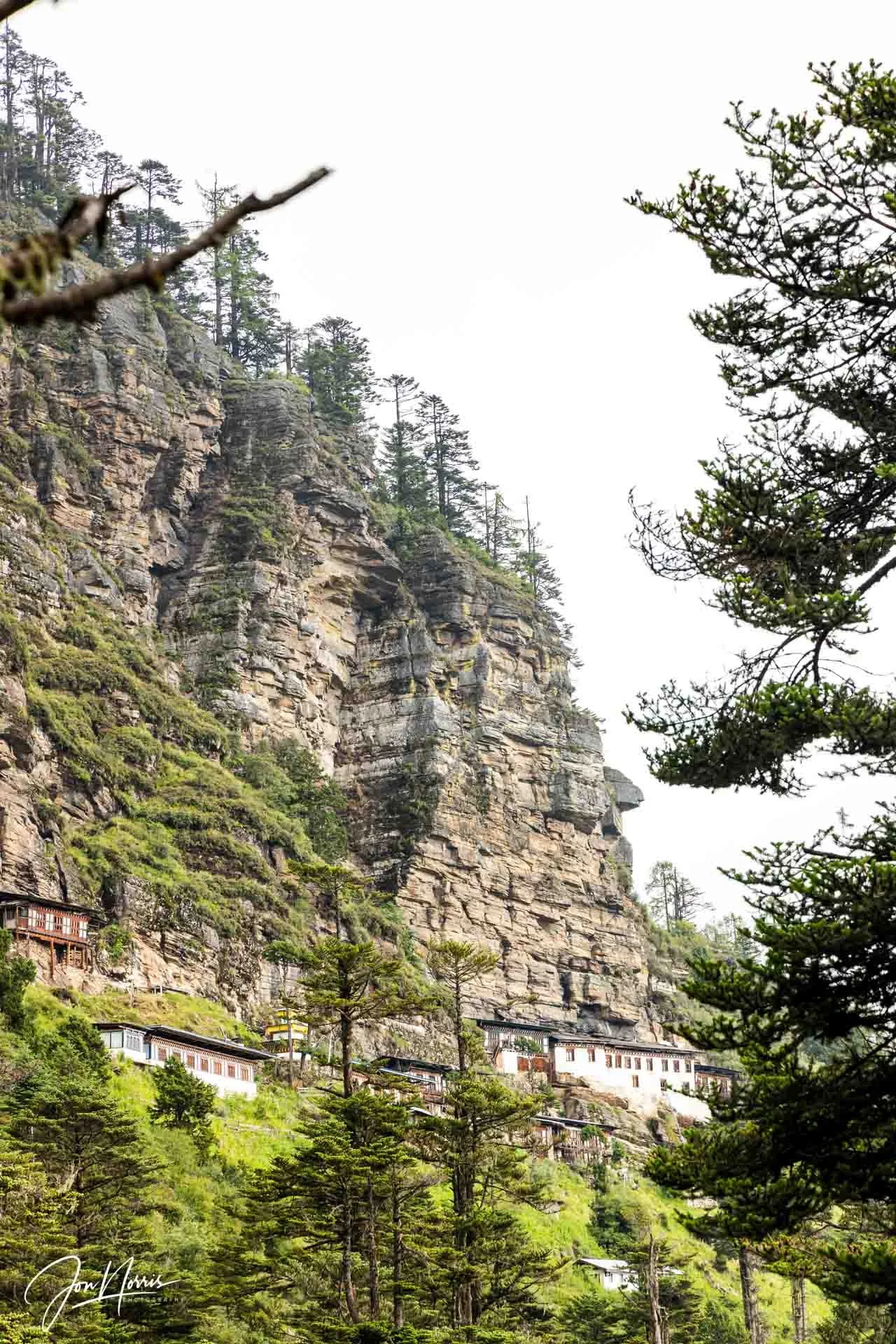
Kila Goenpa Nunnery | © 2019 Jon Norris
The nunnery, one of the oldest in Bhutan, dating back to the ninth century, is located high above Paro and is built into the cliffside.
To enter you pass through a small door and ascend a short flight of stairs. We enjoyed tea and biscuits with the nuns and then presented them with a gift of blankets to help them through the winter.
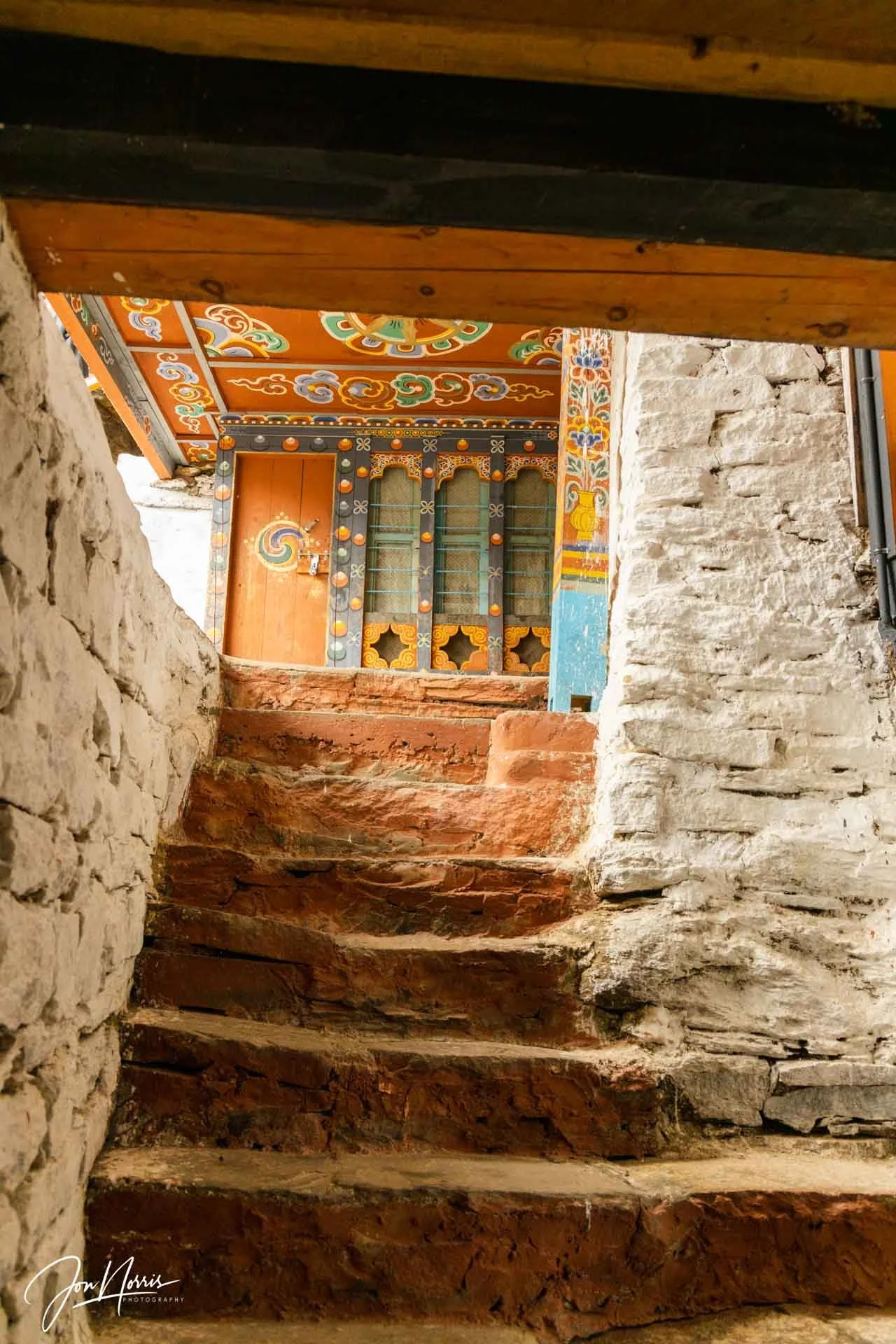
Kila Goenpa Nunnery | © 2019 Jon Norris
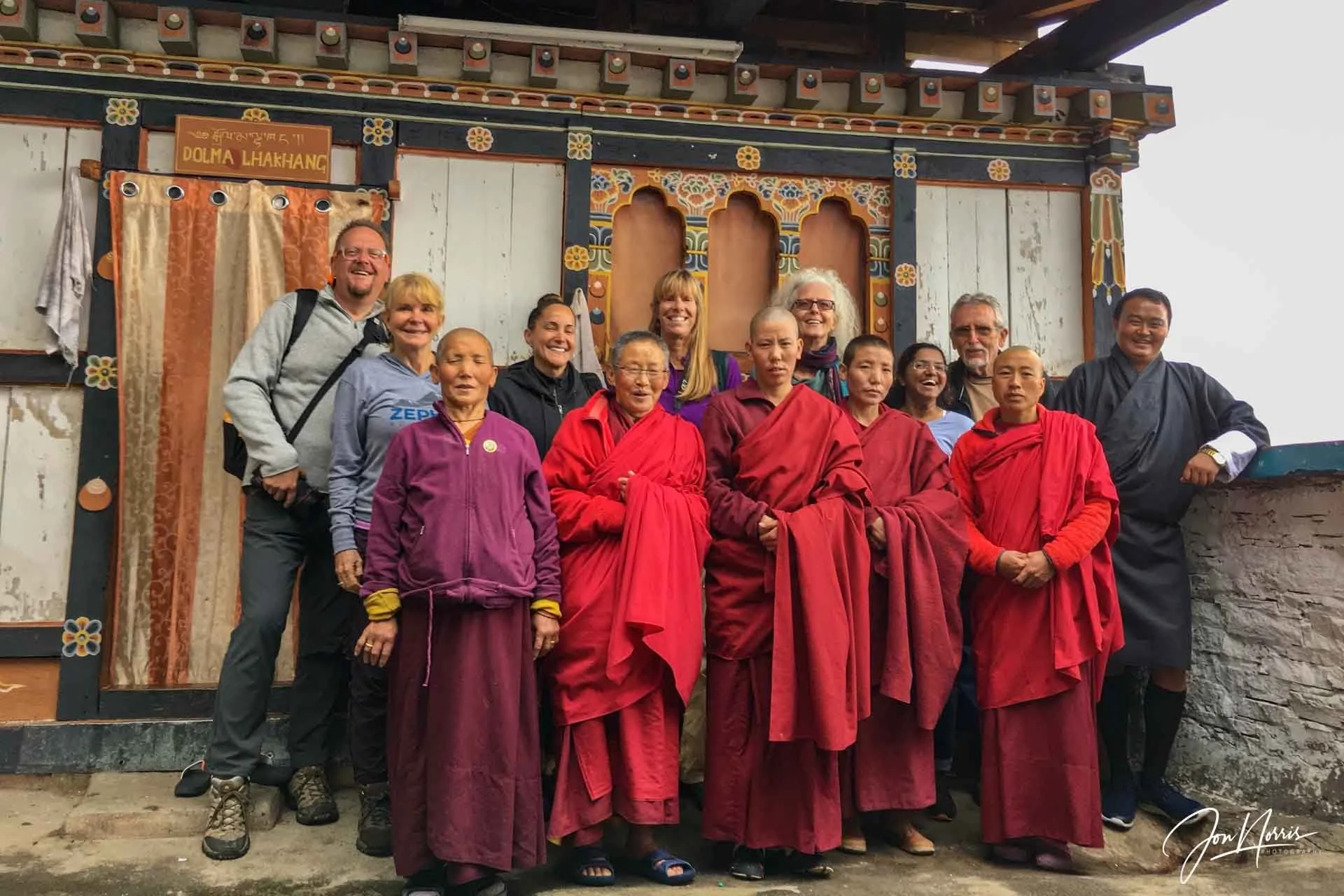
Our group and the Kila Goenpa nuns
After leaving the nunnery and hiking further down hill we headed back into Thimpu and enjoyed wearing traditional Bhutanese dress for the afternoon.
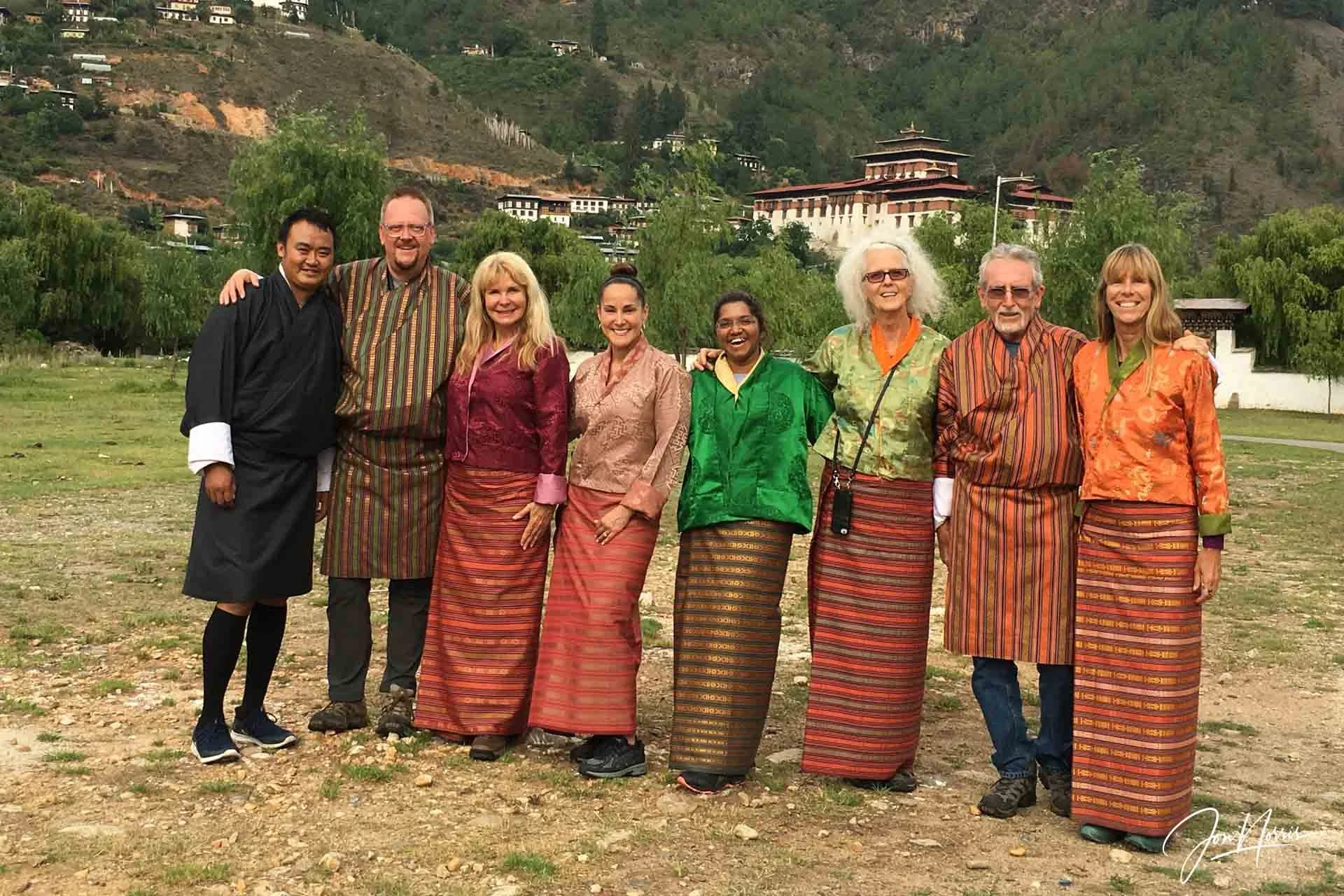
Wearing traditional Bhutanese dress in Thimpu
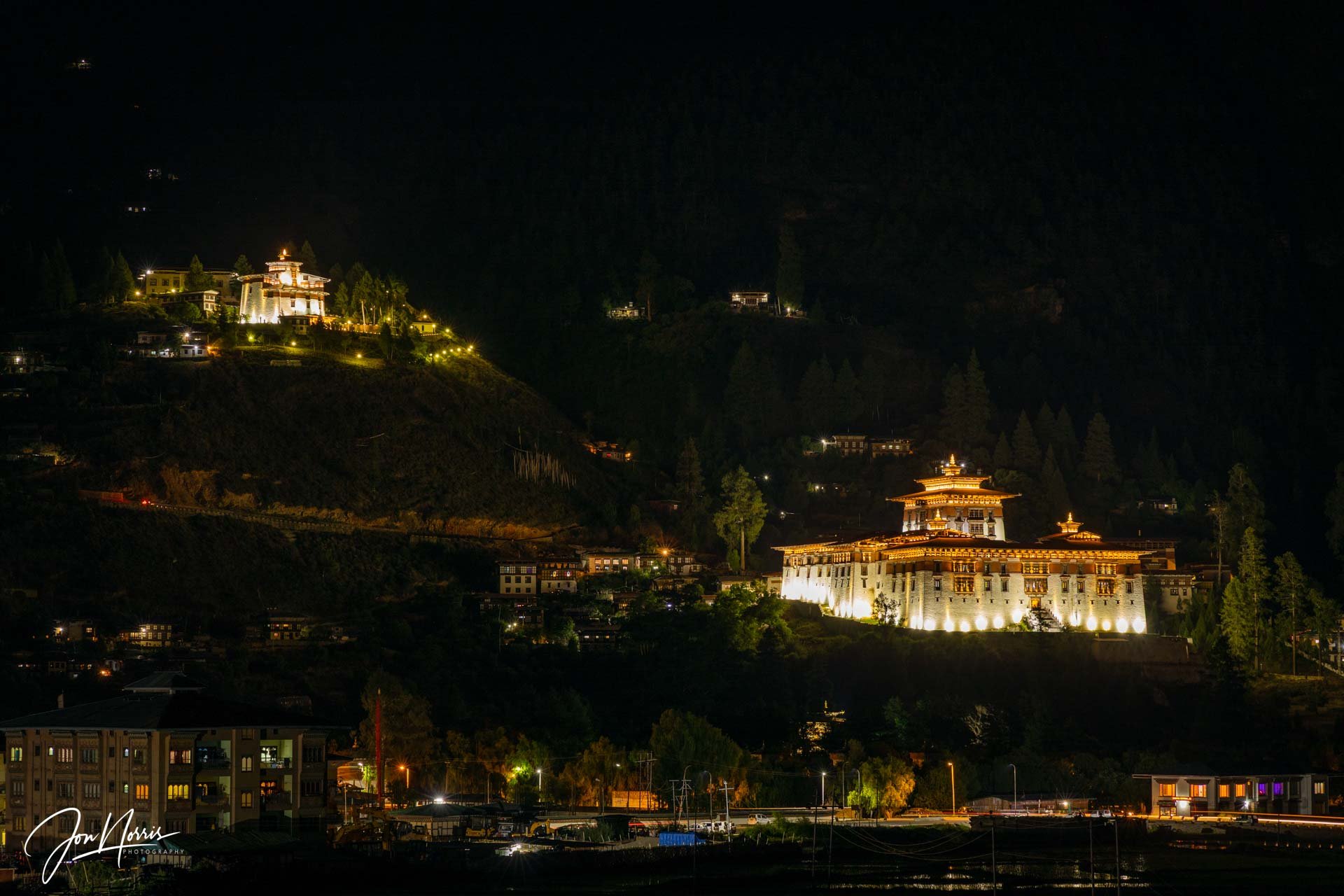
Rinpung Dzong Monastery (also known as Paro Dzong) | © 2019 Jon Norris
That night we were staying in a hotel close to the Paro Chhu river. Despite being exhausted from a wonderful day’s hiking I was determined to stay up until after dark so I could photograph the magnificent Rinpung Dzong Monastery (also known as Paro Dzong). This 17th-century fortress and monastery was built in 1644 by Zhabdrung Ngawang Namgyal (who also built the Sangak Zabdhon Phodrang, which we visited earlier in the day).
After another long day of exploring Bhutan’s scenic and cultural beauty it was time to sleep after a day well spent.
